

Table of Contents
- How Skin Changes in Your 40s
- Best Anti-Aging Ingredients for Your 40s
- How to Layer Skincare Products Effectively
- The Importance of Sunscreen for Anti-Aging
- Addressing Fine Lines, Wrinkles, and Age Spots
- Building a Sustainable, Budget-Conscious Routine
- Hormonal Shifts and Skin Health in Your 40s
- Frequently Asked Questions
Last Updated: September 18, 2026
How Skin Changes in Your 40s
Your skin at 40 is fundamentally different from your skin at 30, biological shifts reshape how it behaves, holds moisture, and repairs itself, which is why anti-aging routines 40s must target these specific changes.
Collagen production drops, cell turnover slows, and the lipid barrier thins. Hormonal fluctuations amplify dryness and sensitivity. Accumulated sun damage becomes visible as age spots and uneven pigmentation. The result: duller, tighter skin with more prominent fine lines.
These changes follow a predictable pattern, so an effective anti-aging routine for your 40s can target them directly.
These shifts demand smarter products, not more of them.
Best Anti-Aging Ingredients for Your 40s
Your skin in your 40s responds to specific compounds that address root causes of aging: slowing visible aging, supporting collagen production, and restoring barrier function.
Retinoids and Collagen Production
Retinoids are the gold standard for anti-aging, they stimulate collagen production and accelerate cell turnover by binding to retinoid receptors in skin cells.
Start with lower concentrations to avoid irritation. Use retinoids at night only with a moisturizer, and always apply SPF during the day, sun exposure while using retinoids increases photosensitivity.
The Glimmer Goddess Organic Retinol Wrinkle Repair Face and Neck Cream delivers retinol designed for mature skin. Consistent retinoid use typically produces visible results within 8-12 weeks.

Vitamin C and Antioxidant Protection
Vitamin C neutralizes free radicals from sun exposure and environmental stress, stopping collagen damage and supporting natural repair.
Apply vitamin C serum in the morning for protection. Look for stabilized forms like L-ascorbic acid, which remain effective longer.
The benefit compounds when combined with sunscreen. Vitamin C + SPF is the most effective daytime defense against photoaging, the sun-driven aging that accounts for most visible wrinkles and age spots.
Hyaluronic Acid and Niacinamide for Hydration
Hyaluronic acid holds up to 1000 times its weight in water, plumping skin and reducing fine line visibility while supporting the barrier.
Niacinamide strengthens the lipid barrier, reduces inflammation, and is gentler than many actives while delivering real benefits.
Together, they create a hydration foundation that allows other actives to work effectively.
How to Layer Skincare Products Effectively
Layering matters, the order determines how well each product penetrates and functions.
Morning Routine Sequence
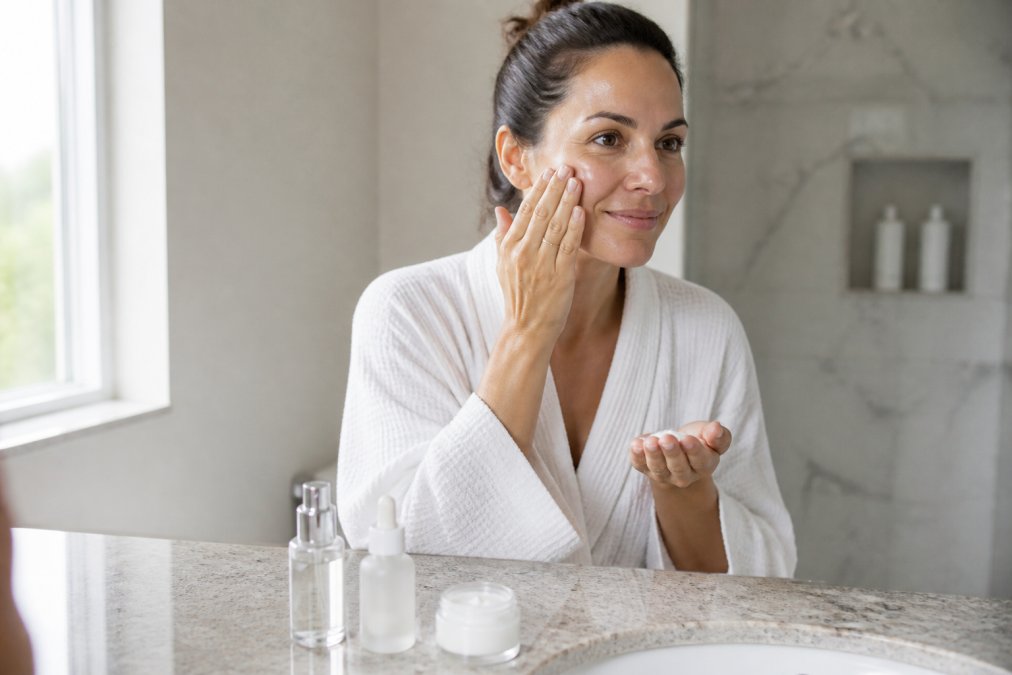
Start with a gentle cleanser. Apply a hydrating toner if desired (wait 30 seconds). Apply vitamin C serum to clean, dry skin (wait 1-2 minutes). Apply a lightweight moisturizer to seal in the vitamin C. Apply SPF 30 or higher as the final step, this is your primary anti-aging tool.
Evening Routine Sequence
Cleanse thoroughly. Apply a hydrating toner if desired (wait 30 seconds). Apply your retinoid product at night only (wait 5-10 minutes). Apply a richer night moisturizer or facial oil to seal everything in. The DermaGlow Collagen Moisturizing Anti Aging Face Cream provides deep hydration and supports barrier repair overnight. Consider a targeted treatment for the eye area or neck.

The Importance of Sunscreen for Anti-Aging
Sunscreen is the foundation of effective anti-aging routines 40s, photoaging accounts for roughly 80% of visible skin aging.
UV damage triggers free radical production, breaks down collagen, and causes pigmentation changes. Daily SPF use allows the skin's natural repair mechanisms to catch up.
Use SPF 30 minimum, reapply every two hours if outdoors, and don't skip it on cloudy days, UV rays penetrate cloud cover. This single habit matters more than any expensive serum.
Addressing Fine Lines, Wrinkles, and Age Spots
Fine lines and wrinkles respond to retinoids, hydration, and time, expect 8-12 weeks of consistent use. Age spots respond to vitamin C, niacinamide, and sun protection. The Neck & Face Lifting LED Therapy Massager offers in-home skin-tightening support through LED light therapy and microcurrent stimulation. The AH-8 Face Firm Care Kit targets the eye area and neck with an electric massage applicator and firming peptides.

Building a Sustainable, Budget-Conscious Routine
Simpler routines work better because consistency is easier and irritation is less likely.
Effective anti-aging ingredients (retinoids, vitamin C, peptides) are expensive from premium brands, making full routines unsustainable for many people.
The active ingredients themselves are not expensive, cost differences are primarily packaging, marketing, and brand positioning, not efficacy.
Glimmer Goddess™ Organic Retinol →
Core Ingredients vs. Brand Premium
Retinol is chemically identical across price points. Differences lie in stabilization, concentration, and supporting ingredients. A well-formulated drugstore retinol at 0.5% concentration outperforms a luxury retinol at 0.25%.
Vitamin C's challenge is stability, it oxidizes quickly. A luxury formula may have better stabilization, but consistent use and proper storage (cool, dark place) make budget options effective.
Hyaluronic acid and niacinamide are inexpensive, drugstore versions have comparable concentrations and efficacy to luxury products.
A Budget-Conscious Routine Framework
If budget is your constraint, prioritize in this order:
Tier 1: Retinoid product and SPF 30+. A retinol-infused moisturizer like the Glimmer Goddess Organic Retinol Wrinkle Repair Face and Neck Cream combines two steps. Drugstore SPF 30 is as effective as luxury.
Tier 2: A hydrating moisturizer and gentle cleanser. Drugstore options with hyaluronic acid and ceramides perform as well as premium versions.
Tier 3: A vitamin C serum or niacinamide product. Niacinamide is often cheaper and equally effective.
Drugstore vs. Luxury: Where It Matters
Luxury brands justify premium pricing through stabilization technology, texture, higher active concentrations, and complementary ingredients, though these are not essential. For a budget routine, invest in a solid drugstore retinoid and SPF, add a hydrating moisturizer, and allocate remaining budget to a vitamin C serum if possible.
Real-World Example: Two Routines, Different Budgets
A budget routine with drugstore cleanser, moisturizer, retinol serum, SPF, and niacinamide addresses all primary anti-aging needs. A mid-range routine adds a premium vitamin C serum and combines retinoid + moisturizer into one product. Both are effective; consistency matters more than price point.
Sustainability Through Simplicity
The most expensive routine is the one you don't use. A simple, affordable routine you stick with beats an expensive routine you quit.
Better Living Mosaic curates products designed to solve real problems. The Beauty Bundle: Anti-Aging Skin & Hair Care includes a Phytotox Serum, Phytotox Tallow, and Mane Magic, offering a comprehensive approach to natural anti-aging skincare and hair care. The Glimmer Goddess retinol cream serves double duty as both active treatment and night moisturizer.
Your 40s are the perfect time to invest in consistency, not complexity.
Hormonal Shifts and Skin Health in Your 40s
Hormonal changes, particularly perimenopause, reshape skin at the cellular level. Declining estrogen thins the epidermis and slows collagen synthesis. Progesterone fluctuations trigger inflammatory responses, creating paradoxical dryness with congestion.
How Hormones Affect Collagen and Barrier Function
Estrogen regulates sebum production and barrier lipid composition. As estrogen declines, the barrier becomes compromised, irritants penetrate more easily, but skin can't retain moisture.
Lifestyle Integration: Sleep, Stress, and Nutrition
Sleep deprivation increases cortisol, accelerating collagen breakdown and impairing barrier repair. Aim for 7-9 hours nightly, during deep sleep, growth hormone peaks, triggering cellular repair and collagen synthesis.
Why Topical Products Alone Fall Short
A retinoid serum stimulates collagen, but chronic sleep deprivation and elevated cortisol suppress synthesis. A hydrating moisturizer plumps skin temporarily, but dehydration and nutrient deficiency prevent barrier rebuilding.
Frequently Asked Questions
How does skin change when you enter your 40s?
In your 40s, skin experiences reduced collagen production, decreased cell turnover, and hormonal shifts that affect elasticity and hydration. The epidermis thins, making fine lines more visible, while the skin barrier weakens. Sun damage accumulated over decades becomes more apparent as age spots and uneven pigmentation. These changes make an effective anti-aging routine essential for maintaining skin texture and firmness.
What are the best anti-aging ingredients for your 40s?
Retinoids boost collagen production and cell turnover, reducing fine lines and wrinkles. Vitamin C provides antioxidant protection against free radicals and brightens dull skin. Hyaluronic acid and niacinamide restore hydration and strengthen the skin barrier. SPF prevents photoaging and sun damage. These ingredients work synergistically to address multiple signs of aging when layered correctly in your routine.
How should I incorporate retinol into my routine safely?
Start with a low concentration (0.25-0.3%) once or twice weekly, gradually increasing frequency as your skin builds tolerance. Apply retinol to clean, completely dry skin, then wait 15-20 minutes before adding other products. Use it in your evening routine only, followed by a rich moisturizer to support the skin barrier. Always wear SPF 30 or higher during the day, as retinoids increase sun sensitivity. Products like Glimmer Goddess Organic Retinol Wrinkle Repair Face and Neck Cream provide a gentle entry point for retinoid use.
Why is sunscreen non-negotiable for anti-aging?
SPF protects against UVA and UVB rays that cause photoaging, fine lines, wrinkles, and age spots. Sun damage accounts for up to 80% of visible skin aging. Using SPF 30 or higher daily prevents new damage and allows existing damage to heal. Consistent sun protection is the single most effective anti-aging strategy and should be the foundation of any routine targeting your 40s.
Do I need different products for day and night?
Yes. Your daytime routine should focus on protection with a lightweight cleanser, serum, moisturizer, and SPF. Your nighttime routine can include stronger actives like retinoids, richer moisturizers, and hydrating serums since your skin isn't exposed to environmental stressors. Night creams support cellular repair and collagen production while you sleep, making them essential for anti-aging in your 40s.
How often should I exfoliate in my 40s?
Exfoliate 2-3 times weekly to boost cell turnover and improve skin texture without compromising the skin barrier. Chemical exfoliants with AHAs or BHAs are gentler than physical scrubs and more effective for mature skin. Avoid over-exfoliating, which can weaken the lipid barrier and increase sensitivity. Pair exfoliation with hydrating and nourishing products to maintain skin health.
What role does internal health play in skin aging?
Sleep, stress management, hydration, and nutrition directly affect collagen production, inflammation, and skin barrier function. Poor sleep disrupts cellular repair processes, while chronic stress elevates cortisol, accelerating aging. Drinking adequate water supports skin hydration from within, and antioxidant-rich foods combat free radicals. An effective anti-aging routine combines topical treatments with lifestyle habits that support skin health at the cellular level.