

Table of Contents
- What Natural Skincare for Glowing Skin Actually Means
- Best Natural Ingredients for Skin Brightening
- Natural Skincare Routine Steps for Radiant Results
- How to Get Glowing Skin Naturally: Products That Deliver
- Ingredients to Avoid in Clean Beauty Products
- Patch Testing, Ingredient Interactions, and Skin Safety
- Natural Skincare for Different Skin Types
- Sustainability Beyond the 'Natural' Label
- Frequently Asked Questions
Last Updated: August 29, 2026
The best natural skincare for glowing skin starts with understanding what you're actually putting on your face. At Better Living Mosaic, we've curated plant-based skincare products that go beyond marketing buzzwords. This guide covers effective botanical actives and patch testing protocols, giving you a framework for building a radiant skin routine.
Quick Picks:
- Best for brightening: LumiHydra Radiance Essence, a targeted radiance essence for daily hydration
- Best for exfoliation: GlowEnzyme Facial Scrub Gel, enzyme-based exfoliation for a dewy finish
- Best for anti-aging: Glimmer Goddess Organic Retinol Wrinkle Repair Face and Neck Cream, vegan, cruelty-free, and paraben-free
- Best value bundle: Beauty Bundle: Anti-Aging Skin & Hair Care, plant-powered trio made by nurses
What Natural Skincare for Glowing Skin Actually Means
Natural skincare for glowing skin uses products formulated from plant-based extracts, cold-pressed oils, botanical actives, and non-toxic ingredients to improve skin radiance and hydration without relying on synthetic chemicals or harsh preservatives.

The term "natural" carries no regulated FDA definition. Look for certified organic sourcing, transparent ingredient lists, and genuinely synthetic-free formulations. Glowing skin results from a well-maintained skin barrier, consistent hydration, and reduced oxidative stress. Plant-based approaches address all three: antioxidants neutralize free radicals, botanical humectants support hydration, and anti-inflammatory ingredients calm the skin barrier.
Best Natural Ingredients for Skin Brightening
The most effective natural ingredients for skin brightening work through two mechanisms: antioxidant protection against environmental stressors and targeted support for collagen production.
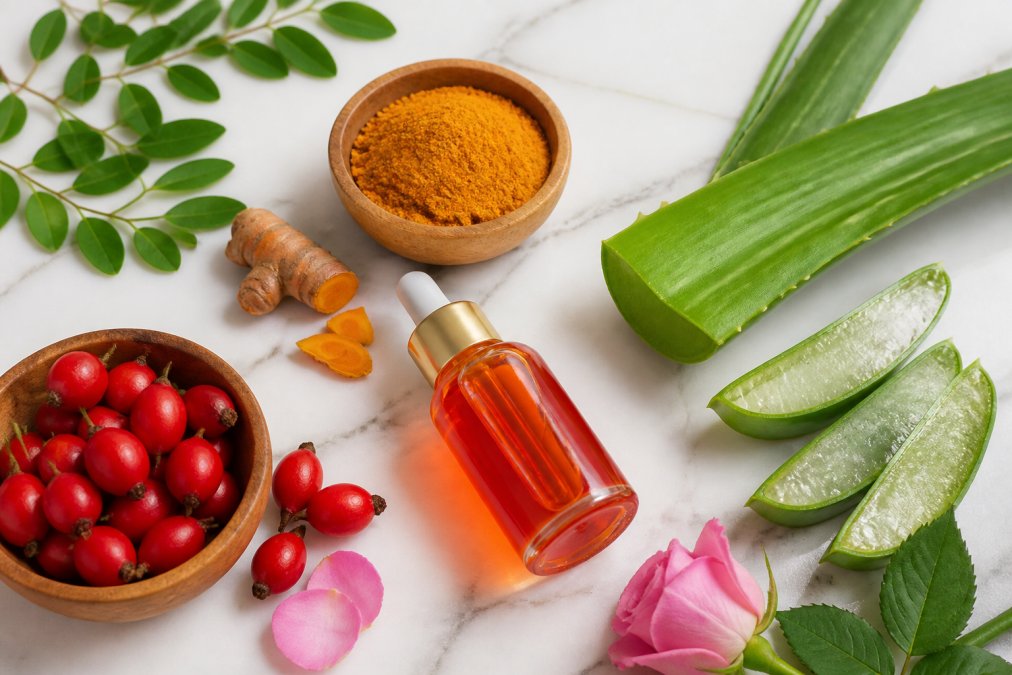
Antioxidant-Rich Plant-Based Extracts
Antioxidant-rich plant-based extracts neutralize free radicals, unstable molecules generated by UV exposure and pollution that break down collagen and dull the complexion.
Key antioxidants to look for:
- Vitamin C (from rosehip, kakadu plum, or acerola cherry): Supports collagen production, brightens uneven tone, and provides antioxidant protection
- Green tea extract: Rich in catechins; anti-inflammatory and effective at reducing redness
- Turmeric (curcumin): Well-studied anti-inflammatory botanical that improves radiance and helps with pore minimization
- Niacinamide (from natural sources): Supports skin barrier function, reduces the appearance of enlarged pores, and evens skin tone
According to the National Center for Complementary and Integrative Health, many botanical ingredients have demonstrated antioxidant activity in laboratory studies. Concentration and formulation stability matter more than the ingredient name. Vitamin C oxidizes quickly when exposed to air and light, so a well-formulated serum in an opaque, airtight container delivers far more benefit than a cheaper product in a clear pump bottle.
Cold-Pressed Oils and Botanical Actives
Cold-pressed oils preserve the full phytonutrient profile because heat processing destroys delicate fatty acids and antioxidants. For skin brightening:
- Rosehip seed oil: High in vitamin A and essential fatty acids; supports skin elasticity and even complexion
- Sea buckthorn oil: Rich in carotenoids; gives skin a dewy finish and supports repair after environmental damage
- Jojoba oil: Mimics the skin's natural sebum; excellent for pH-balanced moisturization without clogging pores
- Bakuchiol: A plant-derived alternative to retinol from the babchi plant; supports collagen production with a gentler profile
The Beauty Bundle: Anti-Aging Skin & Hair Care is built around this philosophy, an RN-made, plant-powered trio including the Phytotox Serum (containing herbs known for their ability to smooth fine lines and support collagen production) and Phytotox Tallow, a deeply hydrating face salve using organic, grass-fed tallow alongside herbal extracts. Free from petroleum, synthetic fragrance, and GMOs.
Natural Skincare Routine Steps for Radiant Results
A structured natural skincare routine is the difference between products that sit on your shelf and ones that actually change your skin. The sequence matters because pH levels, absorption rates, and ingredient interactions all affect how well each product performs.
Morning Routine: Cleanse, Tone, Protect
Step 1, Cleanse: Use a gentle, pH-balanced cleanser that removes overnight oil without stripping the skin barrier.
Step 2, Tone: A botanical toner rebalances skin pH after cleansing and preps the surface for better serum absorption.
Step 3, Serum: Apply your antioxidant serum on clean, toned skin before moisturizer. The LumiHydra Radiance Essence supports a dewy finish and daily hydration.
Step 4, Moisturize: Lock in hydration with a lightweight moisturizer.
Step 5, Protect: Sunscreen is non-negotiable. UV exposure is the single largest driver of premature aging and uneven skin tone. The American Academy of Dermatology confirms daily broad-spectrum SPF use is the most evidence-supported anti-aging step available.
Evening Routine: Exfoliate, Treat, Moisturize
Step 1, Cleanse: Double-cleanse if you've worn sunscreen or makeup. An oil-based first cleanse followed by a gentle water-based cleanser removes everything without over-stripping.
Step 2, Exfoliate (2-3x per week): The GlowEnzyme Facial Scrub Gel is designed for this step. Enzyme-based exfoliation is gentler than physical scrubs and dissolves dead cells rather than abrading them.

Step 3, Treat: Apply your most active ingredients here. The Glimmer Goddess Organic Retinol Wrinkle Repair Face and Neck Cream is formulated with organic retinol, vegan, cruelty-free, and paraben-free. Start with two to three nights per week to assess tolerance.
Step 4, Moisturize: Finish with a richer night moisturizer or face oil to support overnight skin rejuvenation. The DermaGlow Collagen Moisturizing Anti Aging Face Cream is formulated for both day and night use, with hydrating and firming benefits.
How to Get Glowing Skin Naturally: Products That Deliver
Knowing how to get glowing skin naturally comes down to consistency with the right product stack. The best natural skincare for glowing skin isn't a single miracle product, it's a routine where each step reinforces the others.
Here's a practical product framework organized by routine position:
| Product | Routine Step | Key Benefit |
|---|---|---|
| GlowEnzyme Facial Scrub Gel | Evening exfoliation | Enzyme-based cell renewal |
| LumiHydra Radiance Essence | Morning serum/essence | Hydration and radiance support |
| Glimmer Goddess Organic Retinol Cream | Evening treatment | Collagen support, wrinkle appearance |
| DermaGlow Collagen Face Cream | Day and night moisturizer | Hydration, pore minimization, firming |
| AH-8 Face Firm Care Kit | Eye and neck treatment | Targeted firming for delicate areas |
| Beauty Bundle: Anti-Aging Skin & Hair Care | Full routine | Plant-powered anti-aging trio |
| HiveGlow Skin Tightener | Targeted treatment | Skin tightening support |
| GoldenVenom Lift & Firm Stick | On-the-go treatment | Lifting and firming |
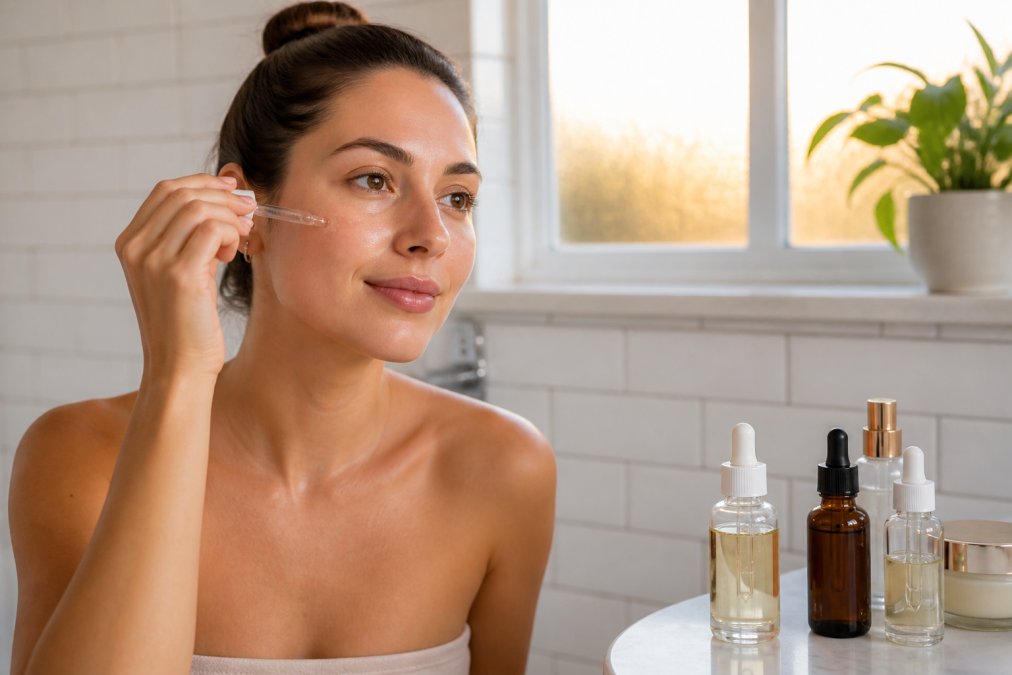
A common mistake is layering too many active products at once. Start with one or two targeted products and introduce new actives one at a time, giving each addition at least two weeks before evaluating results. The AH-8 Face Firm Care Kit targets the eye and neck areas specifically, using Hexapeptide-8 technology alongside an electric massage applicator.

Ingredients to Avoid in Clean Beauty Products
Recognizing what to avoid is as important as knowing the best natural ingredients. Many products marketed as "clean" or "natural" still contain ingredients that compromise the skin barrier.
Synthetic fragrances: Listed as "fragrance" or "parfum," these are among the most common causes of contact dermatitis and allergic reactions.
Parabens (methylparaben, propylparaben, butylparaben): Widely used preservatives that have prompted ongoing discussion regarding endocrine activity.
Sulfates (SDS, SLES): Harsh surfactants that strip the skin barrier and disrupt natural pH balance.
Mineral oil and petroleum derivatives: Create an occlusive barrier that can trap debris and aren't plant-derived.
Formaldehyde-releasing preservatives: Ingredients like DMDM hydantoin and imidazolidinyl urea release small amounts of formaldehyde over time. The Environmental Working Group's Skin Deep database flags these as moderate-to-high concern ingredients.
Synthetic colorants (FD&C dyes): Add no skincare benefit and are a common allergen.
The practical rule: the shorter and more recognizable the ingredient list, the easier it is to verify what you're actually applying to your skin.
Patch Testing, Ingredient Interactions, and Skin Safety
Patch testing is the most underutilized step in natural skincare, and skipping it is the most common mistake when switching to new products.
Patch testing protocol:
- Apply a small amount of the new product to the inner forearm or behind the ear
- Leave in place for 24 hours without washing
- Check at 24 and 48 hours for redness, itching, swelling, or bumps
- If no reaction occurs after 48 hours, introduce the product to your face
- When adding multiple new products, introduce them one at a time with at least one week between additions
This matters even more with natural formulations. Essential oils, botanical extracts, and plant-based actives can trigger reactions in sensitive individuals. "Natural" does not automatically mean hypoallergenic.
Ingredient interactions to know:
Retinol and vitamin C should not be used in the same routine application. Both work best at different pH levels, and combining them can reduce effectiveness while increasing irritation risk. Use vitamin C in the morning and retinol at night. Exfoliating acids (AHAs, BHAs) and retinol should not be layered. Using both in the same evening over-exfoliates the skin barrier. Alternate nights instead. Essential oils are potent botanical actives and should always be used in formulated products at appropriate concentrations, never applied undiluted to the skin.
Natural Skincare for Different Skin Types
Natural skincare for different skin types requires adjusting both ingredient selection and routine intensity.
Oily and acne-prone skin: Focus on non-comedogenic, lightweight plant-based extracts. Jojoba oil, niacinamide, and tea tree (in low concentrations) work well. Enzyme exfoliation like the GlowEnzyme Facial Scrub Gel is preferable to heavy physical scrubs. Avoid thick occlusives and cold-pressed oils with high oleic acid content.
Dry and dehydrated skin: Prioritize hydration at every step. Hyaluronic acid (from fermented plant sources), squalane, and rich botanical butters support the skin barrier effectively. The Phytotox Tallow in the Beauty Bundle is suited for dry or sensitive skin.
Sensitive and reactive skin: Fragrance-free formulations are essential. Prioritize anti-inflammatory botanicals: centella asiatica, chamomile, and oat extract. Patch test every new product before full-face application. Avoid high-concentration essential oils and physical exfoliants.
Combination skin: Zone-specific application works best. Use lighter serums on the T-zone and richer moisturizers on dry areas. A pH-balanced toner helps even out the skin surface before treatment products.
Mature skin: Focus on collagen production support, skin elasticity, and targeted anti-aging actives. The Glimmer Goddess Organic Retinol Wrinkle Repair Face and Neck Cream addresses sagging skin, uneven texture, and age spots. The Neck & Face Lifting LED Therapy Massager adds a device-based approach, using ultrasonic vibration and microcurrent stimulation to support firmness.
Sustainability Beyond the 'Natural' Label
The most overlooked dimension of natural skincare is sustainability. A product can use certified organic ingredients and still have a significant environmental footprint based on packaging, supply chain practices, and sourcing ethics.
What to actually look for:
Sustainable sourcing: Responsible brands source from fair-trade certified cooperatives or document their supply chain transparency.
Packaging: Glass and aluminum are recyclable at higher rates than most plastics. Refillable formats reduce total packaging waste.
Cruelty-free certification: Leaping Bunny and PETA's Beauty Without Bunnies program are the two primary third-party cruelty-free certifications recognized in the US market. "Not tested on animals" without third-party verification is an unaudited claim.
Concentrated formulas: Products with higher active concentrations require less volume per use, which means smaller packaging, lower shipping weight, and less overall waste.
Greenwashing red flags: Vague terms like "eco-friendly," "green," or "earth-conscious" with no certification or specific claim to back them up. The FTC Green Guides on environmental marketing claims provide guidance on what constitutes a substantiated environmental claim.
The Beauty Bundle explicitly notes sustainable sourcing practices: tallow is locally sourced from 100% grass-fed cows, and products are made in small batches, both indicators of a more traceable supply chain.
| Sustainability Factor | What to Look For | Red Flag |
|---|---|---|
| Ingredient sourcing | Fair-trade certified, supply chain transparency | No sourcing information |
| Packaging | Glass, aluminum, or refillable formats | Single-use plastic with no recycling info |
| Cruelty-free | Leaping Bunny or PETA certified | "Not tested on animals" without certification |
| Formula concentration | High active concentration, small volume | Diluted formula in oversized packaging |
| Environmental claims | FTC-compliant, specific and verifiable | "Eco-friendly" with no supporting detail |
The real question isn't whether a product is natural. It's whether the full lifecycle of that product reflects the values the label implies.
Building a natural skincare routine that genuinely delivers glowing skin takes more than picking products with botanical-sounding names. The challenge is knowing which ingredients actually work, how to layer them safely, and how to match formulations to your specific skin type. Better Living Mosaic curates a focused selection of plant-based skincare products, including the GlowEnzyme Facial Scrub Gel, LumiHydra Radiance Essence, and the plant-powered Beauty Bundle, backed by a 30-day money-back guarantee and free worldwide shipping. Shop Better Living Mosaic and build a routine that works for your skin, not just your shelf.
Frequently Asked Questions
What is the best natural skincare routine for glowing skin?
A consistent routine is the foundation. Start mornings with a gentle pH-balanced cleanser, a hydrating toner, a serum with antioxidants like vitamin C or plant-based extracts, and a moisturizer with SPF. Evenings are the time for exfoliation two to three times per week, a targeted treatment serum, and a richer moisturizer or facial oil. Sticking to this natural skincare routine daily for four to six weeks is when most people begin to notice visible radiance and a more even skin tone.
Which natural ingredients are most effective for brightening the skin?
The best natural ingredients for skin brightening include vitamin C from botanical sources like rosehip, niacinamide derived from plant sources, alpha hydroxy acids from fruits, turmeric, and cold-pressed oils rich in phytonutrients. These ingredients work by neutralizing free radicals, supporting collagen production, and encouraging gentle exfoliation to reveal fresher skin underneath. Look for certified organic or dermatologist-tested formulas to confirm ingredient quality and concentration.
Are natural skincare products as effective as synthetic alternatives?
Many plant-based extracts and botanical actives have well-documented effects on hydration, skin barrier support, and radiance. The key difference is that certified organic and non-toxic formulations avoid synthetic preservatives and irritants that can trigger sensitivity over time. For anti-aging goals specifically, natural retinol alternatives and cold-pressed oils can support skin elasticity and a dewy finish without the irritation that high-strength synthetic retinoids sometimes cause, making them a practical option for sensitive skin types.
How long does it take to see results from a natural skincare routine?
Most people see initial improvements in skin texture and hydration within two to four weeks of consistent use. Visible changes in radiance, pore minimization, and skin tone typically take four to eight weeks, since the skin's natural renewal cycle runs approximately 28 days. Anti-aging benefits like improved skin elasticity and reduced fine line appearance generally require eight to twelve weeks of daily use. Patch testing new products first and introducing them one at a time helps you identify what is actually driving the results.
How do I patch test a new natural skincare product safely?
Apply a small amount of the product to the inside of your forearm or behind your ear. Leave it on for 24 hours without washing the area. Check for redness, itching, swelling, or any reaction. If none appears after 24 hours, the product is generally safe to use on your face. Even hypoallergenic and synthetic-free products can cause reactions in individuals with specific sensitivities, so patch testing every new addition to your routine is a practical habit regardless of how clean the formula is.
This article was written using GrandRanker