
Table of Contents
- What Science Actually Means by "Reversing Aging"
- Biological Age vs Chronological Age: Why the Difference Matters
- The Strongest Evidence: Cellular Reprogramming and Epigenetic Change
- Pharmacological Interventions and Clinical Trials: Where Human Testing Stands
- A Scientific Approach to Skincare: What the Evidence Supports Today
- How to Improve Skin Elasticity Naturally (Without Overpromising)
- Safety, Regulation, and the Timeline for Real Treatments
- Frequently Asked Questions
Last Updated: September 29, 2026
What Science Actually Means by "Reversing Aging"
The honest answer is that science has not reversed aging in humans. Researchers have slowed specific markers of decline in cells and animals, but the gap to a human treatment remains wide. This guide examines what the evidence supports, where hype outruns data, and what you can reasonably do today.
The question "Is there any scientific evidence that reverses aging?" gets a confident yes online far too often.
Biological Age vs Chronological Age: Why the Difference Matters
Chronological age is the years you have lived. Biological age estimates how well your cells and tissues function relative to those years. The two can diverge, and that gap is what researchers measure.
How Researchers Measure Biological Age
Scientists estimate biological age using several established approaches:
- DNA methylation clocks, which track chemical tags on DNA that shift predictably with age
- Telomere length, the protective caps on chromosomes that shorten over time
- Biomarkers of aging drawn from blood panels, including inflammatory and metabolic markers
- Epigenetic clock algorithms, which combine methylation data into a single age estimate
Each method captures a different slice of aging. None measures aging in full, and a change in one clock does not guarantee a change in real health outcomes.
The Strongest Evidence: Cellular Reprogramming and Epigenetic Change
Cellular reprogramming is the most compelling area of longevity research, and the most misunderstood. In the lab, introducing specific transcription factors can push adult cells back toward a stem-cell-like state.
Transcription Factors, DNA Methylation, and the Epigenetic Clock
The mechanism works roughly like this:
- Transcription factors bind to DNA and alter gene expression
- DNA methylation patterns shift, changing which genes are switched on
- The epigenetic clock reads younger in the treated cells
Partial reprogramming, brief rather than continuous exposure, has improved tissue repair in animal models without turning cells into tumors. Full reprogramming carries real cancer risk, which is why researchers pursue partial approaches.
Pharmacological Interventions and Clinical Trials: Where Human Testing Stands
No drug has been approved to reverse aging. Several compounds are under study and a few have reached human trials, but the Food and Drug Administration has not approved any therapy for an aging indication, aging is not a recognized disease endpoint, which is why the approval path looks as it does.
Other candidates under active investigation include:
- Senolytics, compounds designed to clear senescent cells, the "zombie" cells that stop dividing but resist dying and secrete inflammatory signals. Dasatinib plus quercetin is the most-cited combination in early human studies.
- NAD+ precursors, nicotinamide riboside and nicotinamide mononucleotide, which feed a coenzyme tied to mitochondrial energy metabolism. Human trials have generally shown rises in blood NAD+ levels without consistent functional benefit.
- Metformin, a long-approved diabetes drug that some observational data associates with lower rates of certain age-related diseases. Whether that reflects an aging effect or a diabetes-management effect is unresolved.
- GLP-1 receptor agonists, originally for diabetes and weight management, now studied for downstream effects on cardiovascular and metabolic aging markers.
What Human Trials Actually Measure
This is the detail most coverage skips. A trial reporting success is usually reporting success on a surrogate endpoint, a lab value or physical measurement standing in for a real outcome. Common surrogates include:
- Change in DNA methylation age (the epigenetic clock)
- Inflammatory markers such as C-reactive protein and interleukin-6
- Grip strength, gait speed, and other physical function measures
- Immune cell composition and response to vaccination
The Regulatory Roadmap
In the United States, a therapy claiming to reverse aging would need to clear the standard clinical trial process:
- Preclinical, laboratory and animal work to establish a plausible mechanism and a safety signal.
- Phase 1, small groups of healthy volunteers, focused almost entirely on safety, dosing, and side effects.
- Phase 2, larger groups, looking for early evidence of effect on a defined endpoint.
- Phase 3, large, controlled trials comparing the treatment against placebo or standard care, with enough participants to detect real outcome differences.
- FDA review, a full submission and evaluation before any approval.
A Scientific Approach to Skincare: What the Evidence Supports Today
Skin is where aging research meets daily life, and where marketing language runs furthest ahead of the data. No cream reverses aging. Some ingredients have reasonable evidence for improving the appearance of skin over time.
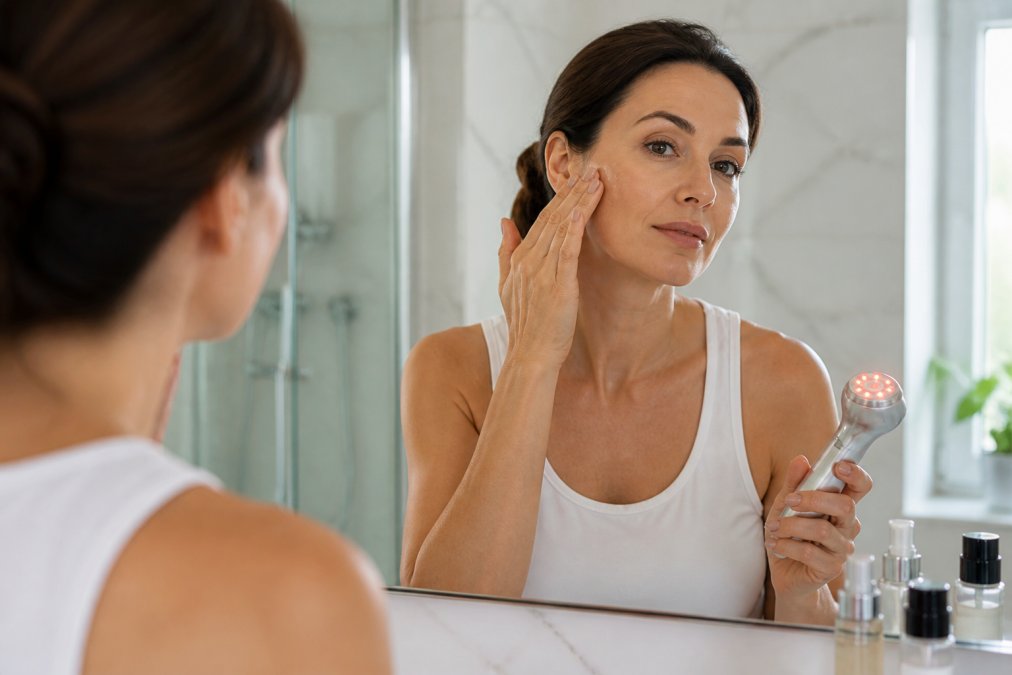
Evidence-Based Anti-Aging Skincare Routines That Fit Real Life
A routine that works is one you will actually follow. Here is a practical structure:
- Morning: gentle cleanser, moisturizer, broad-spectrum sun protection
- Evening: cleanser, treatment product, moisturizer
- Weekly: one exfoliating or device-based step, not five
How to Improve Skin Elasticity Naturally (Without Overpromising)
Skin elasticity declines with age as collagen and elastin production slows. You cannot stop that, but several habits support skin health over time.
- Protect from UV exposure daily, not just at the beach
- Keep skin hydrated with a moisturizer suited to your skin type
- Avoid smoking, which degrades collagen
- Sleep consistently, since skin repair happens largely overnight
- Support collagen with formulas designed for firming and hydration
Safety, Regulation, and the Timeline for Real Treatments
Most coverage of longevity science focuses on the how and skips the risk. That gap matters, because safety questions determine whether any of this reaches healthy people.
Why Reversal Is Hard to Do Safely
The core tension: the same mechanisms that rejuvenate cells can also destabilize them.
- Oncogenic potential. Full cellular reprogramming pushes adult cells back toward a stem-cell-like state. Cells in that state divide readily. Uncontrolled division is the definition of cancer. This is why researchers pursue partial reprogramming, brief exposure to the transcription factors rather than continuous expression, and why the difference between the two is not a minor technical detail but the entire safety margin.
- Loss of cell identity. A cell that has been pushed too far back may forget what it was supposed to be. A liver cell that stops behaving like a liver cell is not a rejuvenated liver cell; it is a malfunctioning one.
- Immune consequences. Senolytics clear senescent cells, which sounds straightforwardly good. But senescent cells also play roles in wound healing and tumor suppression. Clearing them indiscriminately could remove a protective function along with a harmful one.
- Off-target effects. Compounds that alter signaling pathways rarely act on one tissue alone. A drug that changes metabolism in the liver also changes it elsewhere.
What Regulators Would Require
Before any reprogramming-based therapy could be offered to healthy people, the safety package would need to answer questions that current research has not resolved:
- Does the intervention increase tumor incidence over years, not months?
- Are the epigenetic changes stable, or do they drift back or continue past the intended point?
- What happens with repeated dosing, which is how a real therapy would likely be used?
- How do effects differ across age groups, since an older immune system responds differently than a younger one?
A Realistic Timeline
No true anti-aging therapy is approved today, and none is imminent. A reasonable framing:
- Near term (already here): biomarker monitoring, lifestyle interventions, and cosmetic products that improve appearance without altering biology.
- Mid term (years out): more human trials reporting on surrogate endpoints, with results that will be mixed and widely misreported.
- Long term (a decade or more): the first potential approvals, and only after large safety trials in healthy populations.
Frequently Asked Questions
Is it scientifically possible to reverse aging?
Not in the sense of turning back the clock on the whole body. Laboratory studies show that cellular reprogramming and epigenetic changes can reverse some markers of aging in cells and animal models, and biological age can shift with lifestyle changes. But no intervention has been proven to reverse aging in humans overall. What the evidence supports today is slowing age-related decline and improving healthspan, not full reversal.
Does biological age differ from chronological age?
Yes. Chronological age is the number of years you have lived. Biological age estimates how well your cells and organs are functioning, using biomarkers such as DNA methylation patterns, telomere length, and mitochondrial health. Two people born the same year can have biological ages that differ by several years. Researchers use epigenetic clocks to estimate this gap, though the measurements are still being refined.
Can supplements actually reverse the aging process?
No supplement has been shown to reverse aging in humans. Some compounds, including rapamycin and others that target cellular signaling pathways, are being studied in clinical trials, but results are preliminary and side-effect profiles are still being mapped. Lifestyle habits with the strongest evidence, such as regular movement, sleep, and sun protection, slow age-related decline rather than reverse it.
How do I improve skin elasticity naturally?
Daily sunscreen is the single most effective step, since UV exposure breaks down collagen and elastin. Retinol-based creams, adequate hydration, and not smoking also support skin firmness over time. Devices that combine microcurrent stimulation and LED light, such as the Neck & Face Lifting LED Therapy Massager, are designed to help smooth fine lines along the neck and jawline with 5-10 minutes of daily use. Results vary, and none of these steps reverse aging itself.
Aging research is moving, but the gap between a promising lab result and a proven human treatment is measured in years, not months. Until then, the practical path is protecting what you have. Better Living Mosaic curates skincare and wellness essentials chosen for real value rather than dramatic promises, backed by a 30-day money-back guarantee and free worldwide shipping. Explore the collection and build a routine grounded in what the evidence actually supports.