

Table of Contents
- What Whitening Pens Are and Why They Work for Touch-Ups
- Should You Brush Before Using a Whitening Pen?
- Step-by-Step: How to Apply Whitening Gel With a Pen
- How Long to Leave Whitening Pen on Teeth
- Do You Rinse After Using a Whitening Pen?
- How Often to Use a Whitening Pen for Touch-Ups
- Troubleshooting: Sensitivity, Gum Irritation, and Uneven Results
- Building a Touch-Up Routine That Lasts
- Frequently Asked Questions
Last Updated: October 18, 2026
What Whitening Pens Are and Why They Work for Touch-Ups
A whitening pen is a small, portable tube that holds a whitening gel and delivers it through a brush-tip applicator.
Here's the appeal. A full whitening treatment handles the whole smile. A pen handles the one tooth that catches coffee every morning.
Better Living Mosaic carries a small, curated oral care lineup for exactly this reason.
How the Gel and Brush-Tip Applicator Work
The gel inside a whitening pen usually contains hydrogen peroxide or carbamide peroxide, the same active ingredients used in strips and trays.
That precision is the whole point. You target surface stains on the front teeth instead of soaking the entire mouth.
- Brush-tip applicator: paints gel exactly where you need it
- Twist dial: pushes gel to the tip with each turn
- Portable size: fits in a bag for midday touch-ups
Most pens use a thin, low-strength formula. That is deliberate. You can use them more often than a full treatment without overwhelming your enamel.
Should You Brush Before Using a Whitening Pen?
Yes. Brush first, then use the pen. Brushing removes food, plaque, and the day's coffee film so the gel reaches the enamel instead of sitting on top of debris.
A common mistake is skipping this step. Gel on a dirty tooth does almost nothing.
Wait a few minutes after brushing, though. Some toothpastes leave a residue that can block the gel from settling evenly.
- Brush with a soft-bristle brush
- Floss if you have time
- Wait two to three minutes
Step-by-Step: How to Apply Whitening Gel With a Pen
Applying whitening gel takes about two minutes once you have the routine down. The steps below work for almost any brush-tip pen.
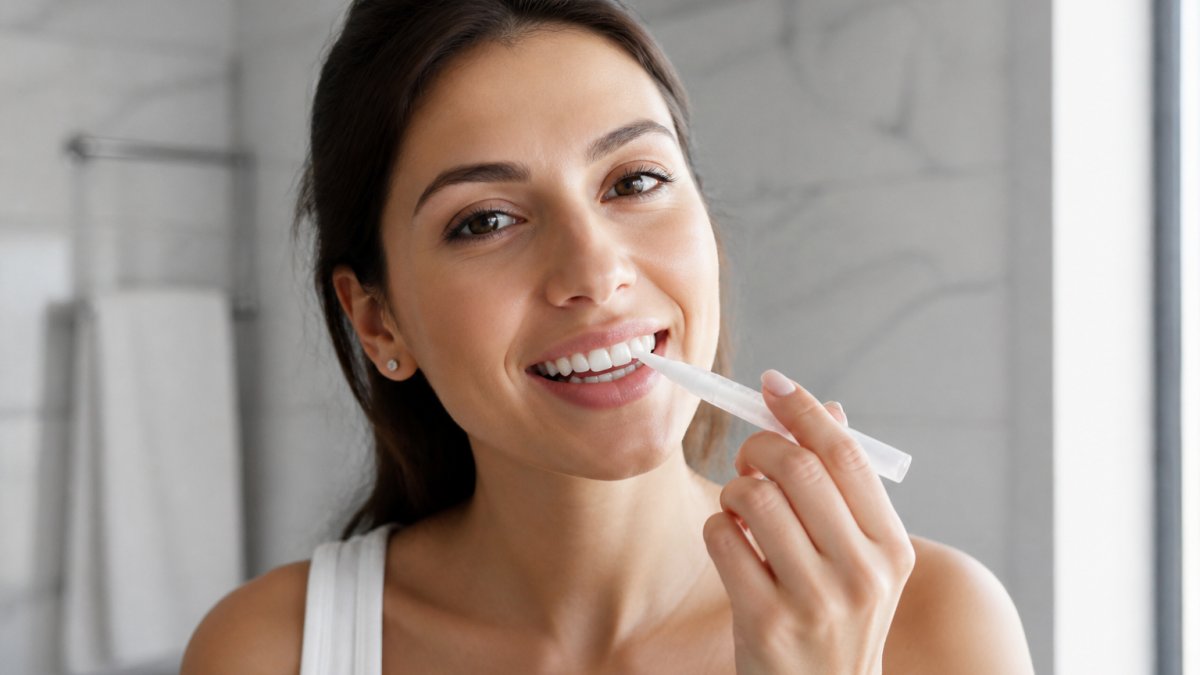
Prep: Clean and Dry Your Teeth
Clean teeth are the foundation of a good result. Dry teeth are the second half of that foundation.
Gel sticks to a dry surface. On a wet tooth it slides and pools near the gum line, which is exactly where you do not want it.
Pat the front of your teeth with a clean tissue or let them air dry for a few seconds.
Twist, Dispense, and Paint a Thin, Even Layer
Now the application itself. Keep it thin.
- Twist the dial until a small bead of gel appears at the brush tip
- Paint a thin layer across the front of each visible tooth
- Avoid the gum line by a millimeter or two
- Let the gel set for a few seconds before you close your mouth
- Wipe any excess off your gums with a tissue
Thin and even beats thick and patchy every time. A heavy layer does not whiten faster. It just irritates gums and wastes product.
How Long to Leave Whitening Pen on Teeth
Follow the label on your pen.
Most pens instruct you to leave the gel on for anywhere from 10 to 30 minutes. Some say to leave it longer.
Do not guess and do not extend the time to speed things up.
Set a timer on your phone. It is easy to forget a pen is on while you answer emails.
Do You Rinse After Using a Whitening Pen?
It depends on the product, so read the instructions first. Some pens tell you to spit and leave the remaining film in place.
If your label does not say, rinse gently with lukewarm water.
Then follow one simple rule: no food or drink for 30 minutes after. Coffee, tea, and red wine in that window undo the work you just did.
How Often to Use a Whitening Pen for Touch-Ups
Frequency is where most touch-up routines go wrong, and it is also where generic advice online does the most damage. The right schedule depends on three things: what your pen's label says, what whitening you did before, and how your teeth respond.
SmileGlow™ Teeth Brightening Serum →
Start With the Label, Not the Internet
Every pen formula is different. A low-strength peroxide pen may be labeled for daily use over a short stretch, while a stronger formula may cap you at a few times a week.
A useful habit: photograph the directions panel the day you open the pen. Labels wear off, and you will want that reference two months in when you have forgotten the exact wording.
Match the Cadence to Your Prior Whitening
The pen is a maintenance tool, not a standalone treatment. How you schedule it should reflect what came before.
| Prior whitening | Realistic pen cadence | What to expect |
|---|---|---|
| In-office or professional whitening | 1-2 times per week, plus a pass before events | Holds the shade you paid for; does not push past it |
| At-home strips or trays, recently finished | 2-3 times per week for the first month, then 1-2 | Slows the fade that normally happens in weeks 2-6 |
| No prior whitening, pen only | Daily for 5-7 days, then reassess | Gradual lift of surface stains; modest, not dramatic |
| Special event in 3-4 days | Once daily for 3-4 days before | A visible refresh, not a full shade change |
Two things that table makes clear. First, a pen used after professional whitening is protecting an investment, not creating a new result. Second, if you have never whitened and want a meaningful shade change, a full treatment is the more appropriate starting point, and the pen becomes the upkeep tool afterward.
Set a Realistic Expectation
Pens work on surface stains from coffee, tea, wine, and smoking. They do not lighten the intrinsic color inside the tooth, and they will not change the shade of crowns, veneers, bonding, or fillings. If your goal is "one shade brighter on the front teeth before a wedding," a pen can deliver that. If your goal is "several shades lighter across the whole smile," that is a full-treatment job.
Know When to Dial Back
Frequency is the first dial to turn down when something feels off. A common pattern is to cut to every other day for a week, keep the layer thin, and see whether sensitivity settles. If it does not settle after that pause, stop using the pen and check with a dentist before restarting.
When a Full Treatment Beats More Pen Sessions
If you have been using a pen consistently for two to three weeks and see no change, more sessions will not help. That usually means the stain is below the surface, the formula is not matched to the stain type, or the teeth need a full-treatment approach. At that point, a complete whitening course is the better use of your time than doubling up on the pen.
Troubleshooting: Sensitivity, Gum Irritation, and Uneven Results
Most pen problems are application problems, not product problems. The fixes below cover the issues readers actually run into, in roughly the order they show up.
Sensitivity and Gum Irritation
Sensitivity is the most common complaint, and it almost always traces back to too much gel or too much time.
Gum irritation has a different cause, gel sitting on soft tissue. Wipe the gum line with a clean tissue immediately after application, and stop painting a millimeter or two short of the gum edge. If your gums look red or feel raw, pause the pen until they look normal again.
Application Problems and Their Fixes
These are the issues that make people think the pen "does not work" when the real problem is technique.
- Gel pooling near the gum line. Usually caused by wet teeth or an overloaded brush tip. Dry the tooth surface first, twist only until a small bead appears, and paint in one direction rather than dabbing.
- Patchy, uneven coating. The brush tip is skipping. Reload with a small bead and go back over the missed area in a second thin pass rather than pressing harder.
- Saliva contamination mid-application. Saliva dilutes the gel and pushes it around. Work on the upper teeth first, then the lower, and keep your tongue away from the front teeth while the gel sets. A dry tissue held against the lower front teeth helps.
When the Stain Will Not Budge
Some discoloration is not a surface stain and will not respond to any pen, no matter how well you apply it. Crowns, veneers, bonding, and fillings do not change color with whitening gel. Intrinsic staining, the kind that comes from inside the tooth, also sits out of reach of a pen. If a single tooth is discolored after dental work, or if the color is uniform across the tooth rather than concentrated at the surface, a dentist is the right next call, not another pen session.
A Quick Pre-Application Checklist
Most of the problems above disappear with a thirty-second setup:
- Teeth brushed and rinsed
- Two to three minutes elapsed since brushing
- Front teeth patted dry with a tissue
Run that checklist for the first week and the routine becomes automatic.
Building a Touch-Up Routine That Lasts
The best touch-up routine is short enough that you actually do it.
Pair that with stain prevention. Rinse with water after coffee. Use a straw for iced tea. Brush within 30 minutes of red wine when you can.
For daily care between pen sessions, we recommend SmileGlow™ Teeth Brightening Serum.

For a deeper reset a few times a year, the Pursonic™ Advanced Smile Whitening Bundle pairs an LED whitening kit, peroxide-free strips, and a rechargeable electric toothbrush with a UV sanitizing function.
Frequently Asked Questions
Do whitening pens actually work for maintaining whitening results?
Whitening pens work best as a maintenance tool, not a replacement for a full whitening treatment. The gel, typically hydrogen peroxide or carbamide peroxide, targets surface stains on visible teeth between professional or at-home sessions. Results build with consistent use, but pens are not designed to lift deep discoloration. For a broader routine, pair touch-ups with a product like SmileGlow Teeth Brightening Serum ($29.95), which supports daily oral care with nano-hydroxyapatite and hydrated silica.
Can you eat or drink after using a whitening pen?
Wait at least 30 minutes after the gel's recommended wear time before eating or drinking. The enamel is more porous right after peroxide exposure, and coffee, tea, wine, or dark sauces can re-stain teeth quickly. Water is fine. If your product label says to leave the gel on longer, follow that timing first, then wait the extra half hour. Skipping this step is one of the most common reasons touch-ups fade fast.
What should you do if a whitening pen causes tooth sensitivity?
Stop using the pen for 24 to 48 hours and switch to a desensitizing toothpaste if you have one. Sensitivity usually comes from leaving gel on too long, using the pen too often, or applying it to gums instead of teeth. When you restart, shorten the wear time and use the pen every other day. If sensitivity persists beyond a week or comes with sharp pain, contact your dentist before continuing.
How do you properly use a whitening pen for touch-ups on specific stains?
Clean and dry your teeth first, then twist the pen until a small bead of gel reaches the brush tip. Paint a thin layer directly onto the stained areas, usually the front visible teeth and along the gum line, and avoid the gums. Leave the gel on for the time your product label states, then follow its rinse instructions. Targeted application on coffee or tannin stains works better than coating every tooth, and it stretches each pen further.
Touch-up whitening only works when it becomes a habit, and habits need products you trust. Better Living Mosaic curates oral care essentials that solve real problems, backs every order with a 30-day money-back guarantee, and ships free worldwide. Start with SmileGlow™ for daily care, add the Pursonic™ bundle for periodic resets, and build a routine your smile can keep up with.