

Table of Contents
- What to Look for in Non-Toxic Skincare for Sensitive Skin
- Clean Beauty Ingredients to Avoid
- How to Patch Test Skincare Products
- Building a Non-Toxic Skincare Routine for Beginners
- Best Non-Toxic Skincare Products at Better Living Mosaic
- Dermatologist-Approved Standards for Sensitive Skin
- Why Non-Toxic Skincare Works for Reactive Skin
- Frequently Asked Questions
Last Updated: September 19, 2026
Sensitive skin demands a different approach to skincare. When your skin reacts to fragrance, dyes, or common preservatives, non-toxic skincare sensitive skin becomes essential, not optional. The challenge isn't finding products; it's finding ones formulated without the irritants that trigger inflammation, redness, or discomfort.
This guide breaks down what matters when building a non-toxic skincare routine, which ingredients to avoid, and how to test products safely before committing.
What to Look for in Non-Toxic Skincare for Sensitive Skin
Sensitive skin isn't a diagnosis, it's a pattern of reactivity to specific ingredients or formulations. The best products share a few consistent traits.
Paraben-free and phthalate-free formulations eliminate major irritant categories. Parabens trigger sensitivity in many users, while phthalates (often hidden under "fragrance") disrupt the endocrine system and aggravate reactive skin.
Look for dermatologist-tested claims backed by actual testing, not just marketing language. A legitimate dermatologist-tested product has been evaluated for safety on sensitive skin types. This matters because it signals the brand invested in clinical validation rather than relying on assumptions.
pH-balanced formulations matter because skin naturally sits at pH 4.5-5.5. Products that stray far from this range disrupt your barrier and trigger inflammation. Check if the brand publishes pH data.
Non-comedogenic ingredients prevent pore clogging, which compounds sensitivity by trapping bacteria and irritants. This is especially important for reactive skin that's also prone to breakouts. The two issues often overlap.
Hypoallergenic certification indicates the product was formulated to minimize allergic reactions. Fragrance-free products perform better than "unscented" ones, which often contain masking fragrances that still irritate.
Look for botanical extracts and soothing agents like centella asiatica, allantoin, or colloidal oatmeal. These reduce inflammation without harsh chemical actives and are the backbone of effective non-toxic skincare sensitive skin.
| Feature | Why It Matters | Red Flag |
|---|---|---|
| Paraben-free | Eliminates common preservative irritant | Product lists parabens |
| Fragrance-free | Avoids synthetic fragrance chemicals | "Unscented" (may contain masking fragrance) |
| pH-balanced | Maintains skin barrier integrity | No pH data disclosed |
| Hypoallergenic | Formulated to minimize reactions | No testing mentioned |
| Botanical extracts | Calms inflammation naturally | Heavy synthetic actives only |
Clean Beauty Ingredients to Avoid
The hardest part of selecting non-toxic skincare for sensitive skin is identifying what to skip. Some ingredients are obvious irritants; others hide behind confusing chemical names.
Sulfates strip natural oils and compromise your barrier. Sodium lauryl sulfate and sodium laureth sulfate are the worst offenders. Sulfate-free cleansers work just as well without the stripping.
Synthetic fragrances are the leading cause of contact dermatitis. The term "fragrance" can hide dozens of undisclosed chemicals. Fragrance-free is the only reliable option for sensitive skin.
Silicones build up on skin and trap bacteria, worsening sensitivity. Dimethicone, cyclomethicone, and amodimethicone compromise your skin's ability to breathe.
Synthetic preservatives like methylisothiazolinone (MIT) and formaldehyde releasers cause delayed allergic reactions. Non-toxic skincare for sensitive skin avoids these entirely.
Endocrine disruptors like BPA, phthalates, oxybenzone, and octinoxate accumulate in your body and interfere with hormonal balance. Mineral-based sunscreens (zinc oxide, titanium dioxide) avoid this category.
Alcohol denat (denatured alcohol) is drying and irritating. It appears in many "lightweight" formulas but destroys your moisture barrier. Cetyl alcohol and stearyl alcohol are different, they're fatty alcohols that moisturize, not irritate.
Avoid products listing mineral oil or petrolatum as primary ingredients if you're prone to breakouts. These occlusive ingredients trap bacteria and heat, worsening reactive skin. Plant-based oils and natural waxes work better.
How to Patch Test Skincare Products
Patch testing prevents wasted money and painful reactions. It's non-negotiable for sensitive skin.
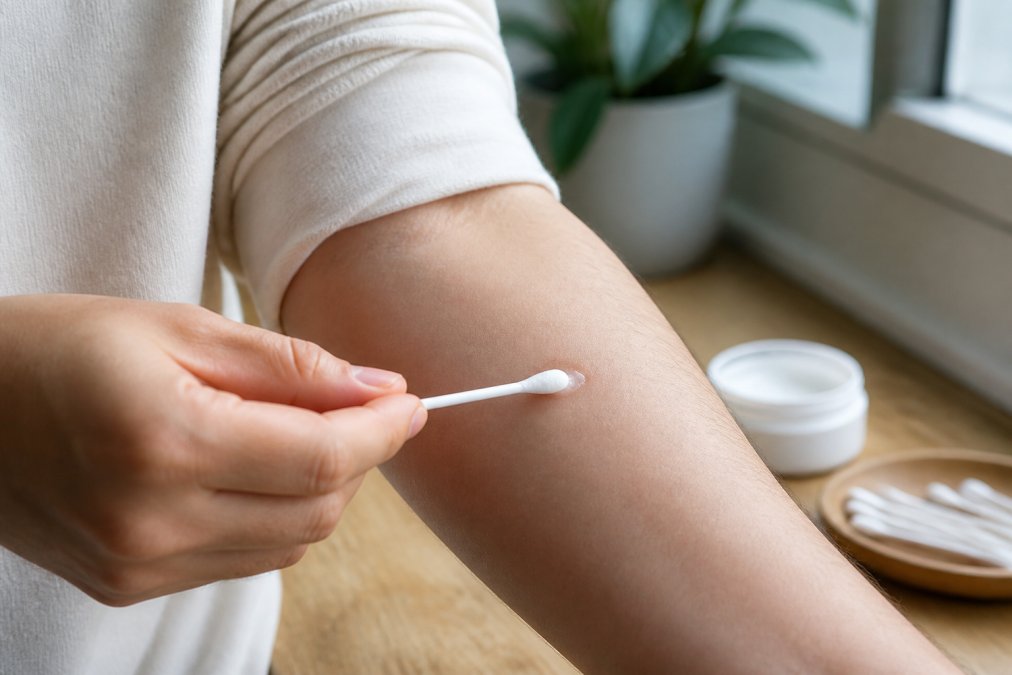
Apply a dime-sized amount to your inner forearm or behind your ear (thinner, more reactive skin). Wait 24-48 hours without washing that area. This timeframe captures both immediate and delayed reactions.
Watch for redness, itching, burning, swelling, or any discomfort. Mild tingling from active ingredients (like retinol) is normal; burning or itching is not. If you see any reaction, stop immediately and rinse with cool water.
If the patch test passes, apply the product to one cheek for 3-5 days before full use. This secondary test catches reactions that don't show on your forearm.
Keep a simple log of product name, test date, and result. Over time, you'll identify patterns in which ingredients trigger reactions.
Never skip patch testing because a product is "natural" or "hypoallergenic." Natural ingredients cause reactions just as often as synthetic ones. Your skin is unique.
Building a Non-Toxic Skincare Routine for Beginners
A simple routine beats a complex one. Every additional product increases the chance of a reaction.
Glimmer Goddess™ Organic Retinol →
Step 1: Cleanse with a fragrance-free, sulfate-free cleanser morning and night. Spend 30-60 seconds massaging gently; don't scrub.
Step 2: Tone (optional) with a hydrating toner if your skin feels tight. Skip it if your cleanser already balances pH.
Step 3: Treat with one active ingredient if needed. Choose either a hydrating serum (hyaluronic acid, glycerin) or a gentle exfoliant (lactic acid, azelaic acid). Don't combine multiple actives. Apply to damp skin.
Step 4: Moisturize with a cream or balm. Look for ceramides, glycerin, and natural oils. Apply to damp skin immediately after your treatment step.
Step 5: Protect with mineral sunscreen during the day (SPF 30 minimum). Zinc oxide and titanium dioxide are safest for sensitive skin.
A five-step routine covers cleansing, hydration, treatment, and protection. If your skin feels good, don't add another product.
Introduce new products one at a time, waiting 1-2 weeks between additions. This lets you identify which product caused a reaction.
Best Non-Toxic Skincare Products at Better Living Mosaic
Better Living Mosaic curates skincare specifically for people who've had bad experiences with conventional products. Our selection focuses on formulations that work for reactive skin without the irritants that trigger inflammation.
Glimmer Goddess Organic Retinol for Anti-Aging
Retinol is powerful for fine lines and skin texture, but it's notoriously irritating for sensitive skin. Glimmer Goddess Organic Retinol Wrinkle Repair Face and Neck Cream bridges that gap with a paraben-free, vegan formula designed for reactive skin.
The product targets multiple signs of aging, wrinkles, sagging skin, uneven texture, and age spots, without the harsh side effects. It provides deep hydration alongside the retinol, which most conventional retinol products skip. Hydration matters because it buffers the irritation that makes people quit retinol after a few days.
At $35.00 for a 2 oz jar, it's positioned as a mid-range investment. The size is modest, but retinol requires careful dosing anyway, you use less than you think. One jar lasts 6-8 weeks with nightly use.
Best for: People who've struggled with conventional retinol but want the anti-aging benefits. The cruelty-free, natural ingredients appeal to consumers who prioritize ethics alongside efficacy.
What works: The organic retinol formulation reduces irritation compared to synthetic alternatives. The added hydration prevents the dryness and flaking that makes retinol unbearable for sensitive skin.
Where it's limited: Retinol requires a 4-6 week adjustment period. Your skin will likely feel slightly dry or irritated initially. This is normal, but it discourages many people. Start with twice-weekly application and work up to nightly use.
FaceGlow Bio-Collagen Mask for Deep Hydration
Hydration is the fastest way to calm reactive skin. FaceGlow Bio-Collagen Peel-Off Mask delivers intense moisture in a single 20-minute application, making it ideal for sensitive skin that needs quick recovery.
The formula combines hydrolyzed collagen, sodium hyaluronate, glycerin, vitamin E, and ceramide NP, all ingredients specifically chosen to support your skin barrier.
Beauty Bundle for a Complete Non-Toxic Routine
For people building a non-toxic skincare routine from scratch, the Beauty Bundle: Anti-Aging Skin & Hair Care offers three powerful hand made formulas infused with nature’s most effective skin and scalp-rejuvenating herbs, bundled for nearly $8 off.

Dermatologist-Approved Standards for Sensitive Skin
Dermatologists recommend non-toxic skincare for sensitive skin based on clinical evidence, not marketing trends. Understanding their standards helps you evaluate products independently.
Why Non-Toxic Skincare Works for Reactive Skin
Reactive skin has a compromised barrier function. Your skin's barrier is a layer of lipids and proteins that protects against irritants and bacteria. When damaged, even mild ingredients trigger inflammation.
Frequently Asked Questions
What ingredients should sensitive skin avoid in skincare?
Sensitive skin reacts poorly to synthetic fragrances, sulfates, phthalates, parabens, and harsh preservatives. Alcohol denat, essential oils at high concentrations, and endocrine disruptors can trigger inflammation. Look for paraben-free, phthalate-free, and fragrance-free formulations instead. Patch testing before full use helps identify personal triggers. Non-toxic skincare avoids these irritants entirely, making it safer for reactive skin.
How do I know if a skincare brand is truly non-toxic?
Check for third-party certifications like cruelty-free, organic certification, and dermatologist-tested labels. Review ingredient lists for synthetic preservatives, endocrine disruptors, and known irritants. Transparent brands disclose ingredient sourcing and manufacturing practices. Better Living Mosaic curates products with verified clean formulations, each item is selected for safety and efficacy, not marketing claims alone. Request ingredient transparency if a brand won't provide it.
Can non-toxic skincare be as effective as conventional products?
Yes. Non-toxic skincare delivers clinical efficacy without harmful additives. Botanical extracts, peptides, hyaluronate, and natural preservatives work as well as synthetic alternatives. The Glimmer Goddess Organic Retinol, for example, reduces wrinkles and fine lines using organic ingredients and paraben-free formulation. Effectiveness depends on active ingredient concentration and skin barrier repair support, not toxicity. Many users see better results because their skin tolerates non-toxic products longer.
How do I build a simple non-toxic skincare routine for sensitive skin?
Start with three steps: cleanse with a gentle, sulfate-free product; hydrate with a fragrance-free essence or serum; moisturize with a barrier-supporting cream. The FaceGlow Bio-Collagen Mask adds weekly hydration with ceramides and sodium hyaluronate. For beginners, the Beauty Bundle provides a complete routine with herbal serums, tallow cream, and scalp oil, all non-toxic and designed for reactive skin. Patch test each product for 24-48 hours before full use.
What are the benefits of using non-toxic skincare for sensitive skin?
Non-toxic skincare reduces inflammation, strengthens the skin barrier, and minimizes irritation from synthetic preservatives and endocrine disruptors. Paraben-free and phthalate-free formulations lower the risk of allergic reactions and cross-reactivity. Botanical extracts provide antioxidant and soothing benefits without harsh chemicals. Hypoallergenic and dermatologist-tested products suit reactive skin types. Long-term use builds skin resilience rather than dependency on heavy actives that compromise sensitivity.