

Table of Contents
- Understanding Red Light Therapy and Eye Exposure
- Red Light Therapy Eye Protection: What You Need to Know
- Can Red Light Therapy Cause Blurry Vision and Other Side Effects
- Red Light Therapy Session Duration and Eye Safety
- Red Light Therapy and Eye Conditions: What You Should Know
- Safe Usage Guidelines for Red Light Therapy Near the Eyes
- When to Avoid Red Light Therapy and Seek Professional Guidance
- Frequently Asked Questions
Last Updated: October 7, 2026
Understanding Red Light Therapy and Eye Exposure
Red light therapy uses red and near-infrared wavelengths, typically 600 to 1,000 nanometers, to support muscle recovery, skin health, and circulation. It delivers photons into your tissues, where they may support energy production and reduce inflammation.

At Better Living Mosaic, we believe in being honest about both benefits and potential risks. Red light therapy side effects on eyes are real and worth understanding before you use these devices near your face.
Red Light Therapy Eye Protection: What You Need to Know
Eye protection matters because your eyes contain delicate structures that respond to light differently than skin or muscle. The retina converts light into signals your brain reads as vision, and intense exposure can overwhelm it.
Protective measures include:
- Wearing protective eyewear designed for red light therapy
- Positioning devices away from direct eye contact
- Keeping devices at safe distances from your face
- Starting with shorter sessions and building up gradually
Better Living Mosaic recommends checking device specifications before purchase. Our Red Light Therapy Belt, for example, is designed for body use and includes clear positioning guidance to keep light away from sensitive areas.
Can Red Light Therapy Cause Blurry Vision and Other Side Effects
Yes, red light therapy can cause temporary vision changes in some people. Blurry vision, light sensitivity, and mild discomfort are possible short-term effects that usually resolve once you stop the session.
Temporary Vision Changes
Temporary vision changes happen when your pupils dilate and contract to regulate light entering the eye during a session near your face. Some people report blurry vision immediately after, typically clearing within minutes to a few hours.
Other temporary changes include:
- Slight difficulty focusing
- Increased light sensitivity for a short period
- Mild floaters or spots in your vision
- A brief sensation of pressure around the eyes
These effects are usually harmless and fade on their own. If blurry vision persists for hours, stop using the device and rest your eyes.
Eye Strain and Discomfort
Eye strain develops when your eye muscles work harder than usual, which can happen if the light is too bright or the session runs too long. Discomfort may feel like dryness, mild aching, muscle tension, or sensitivity to normal light afterward. These symptoms usually mean you used the device too intensely or too long; resting your eyes and avoiding screen time helps them recover faster.
Red Light Therapy Session Duration and Eye Safety
Session length matters for eye safety. Longer sessions don't mean better results and increase your risk of side effects, so start short and build gradually.
Red vs. Near-Infrared: Why the Wavelength Changes the Risk
Red light therapy devices typically emit two wavelength bands:
- Red light (roughly 630-660 nm), mostly absorbed in the upper layers of skin. It scatters and is absorbed before it reaches deep structures, so the eye risk from indirect exposure is lower.
- Near-infrared (roughly 810-850 nm), penetrates deeper into tissue. This is the band that reaches muscle and joint tissue, and it is also the band that can pass through the cornea and lens to reach the retina if aimed at the eye.
A near-infrared panel aimed at your face is not the same risk profile as a red-only LED mask. Check the device's wavelength range and whether the manufacturer states it is cleared for facial or body use only.
What the FDA Device Classification Tells You
Red light therapy devices sold for cosmetic or general wellness use are typically regulated as Class II medical devices under FDA product codes for non-thermal light therapy, or marketed as general wellness products making no medical claims.
A practical rule: if the device's labeling does not explicitly state it is intended for use around the eyes, treat it as a body-only device.
Session Length by Use Case
Shorter, more frequent sessions are generally safer than occasional long ones. A reasonable framework:
- Body use (back, shoulders, knees): 10-20 minutes per area, following the manufacturer's distance guidance. Eye exposure is minimal because the device is not near the face.
- Neck and jawline: 5-10 minutes, with eyes closed and protective eyewear on.
- Facial use (only with a device labeled for it): 5-10 minutes, eyes closed, protective eyewear on, and the device held at the manufacturer's stated distance.
Session duration depends on device intensity and wavelength, distance from your eyes, your eye sensitivity and health history, protective eyewear rated for that wavelength, and frequency of use.

A Gradual Progression You Can Actually Follow
Start with 5 minutes and monitor how your eyes feel. If you experience no discomfort, increase by 1-2 minutes per week up to the manufacturer's maximum. Never jump straight to longer sessions.
- Week 1-2: 5 minutes, 3 times per week
- Week 3-4: 7 minutes, 3 times per week
- Week 5+: 10 minutes, 3-4 times per week (only if the device is labeled for facial or neck use)
If you experience discomfort at any stage, drop back to the previous duration before advancing.
Objective Signs You Should Shorten or Stop
Rather than relying on how you feel in the moment, track measurable signals:
- Time to visual clarity after a session (if it takes longer each week, you're overdoing it)
- Screen-reading tolerance the next morning
- Frequency of light-sensitivity episodes in normal indoor lighting
- Any new floaters, flashes, or persistent afterimages
If any worsen across two consecutive weeks, stop and consult an eye care professional.
The relationship between session length and red light therapy side effects on eyes is direct: longer exposure increases the chance of temporary vision changes, strain, or discomfort.
Red Light Therapy and Eye Conditions: What You Should Know
If you have existing eye conditions, red light therapy requires extra caution. Understanding your eye health status before starting is essential.
Why Specific Conditions Raise the Risk
Not every eye condition carries the same risk. The mechanism matters:
- Age-related macular degeneration (AMD): The macula is the retinal area most sensitive to light damage. Adding concentrated light exposure to already-compromised retinal tissue is a known concern, and most eye care professionals advise against facial red light therapy without clearance.
- Diabetic retinopathy: Fragile retinal blood vessels can be stressed by light and by the heat some devices emit. Clearance is required.
- Glaucoma: Elevated intraocular pressure is not directly caused by red light, but some devices generate mild heat that can affect comfort and tear film. Clearance is required.
- Cataracts: A clouded lens scatters light, which can amplify glare and afterimages during a session. Clearance is required, and protective eyewear is essential.
Medications That Increase Light Sensitivity
Some common medications make your eyes more reactive to bright light, including certain antibiotics (tetracyclines, fluoroquinolones), isotretinoin, some diuretics, and certain antidepressants. If you take any of these, treat facial red light therapy as higher risk and discuss it with your prescriber or an eye care professional first.
Screening Questions to Ask Yourself Before Starting
Run through these before your first session:
- Has an eye doctor ever told me I have a retinal, macular, or optic nerve condition?
- Have I had eye surgery in the last 6 months?
- Do I take a medication known to increase light sensitivity?
- Do I routinely experience glare, halos, or afterimages in normal lighting?
- Does my device's labeling explicitly permit use near the eyes?
If you answer yes to any of the first three, get clearance before using a device near your face. If you answer yes to the fourth, start conservatively and consider body-only use. If you answer no to the fifth, use the device on the body only.
What Clearance Actually Looks Like
A visit to an eye care professional typically covers a dilated eye exam to rule out undiagnosed retinal or macular issues, a review of your medications for photosensitizing drugs, a discussion of your device's wavelength and irradiance, and a recommendation on facial use. Bring your device's manual or spec sheet so your doctor can assess your situation.
If You Have No Diagnosed Conditions
Even without diagnosed conditions, some people are more light-sensitive than others. If you've always had sensitive eyes, start conservatively and watch how your eyes respond; a reasonable first step is body-only use for two weeks before considering facial or neck application. Red light therapy side effects on eyes can be more pronounced in people with existing eye health concerns, so personalized guidance matters, your eye doctor knows your eye health better than any general guide can.
Safe Usage Guidelines for Red Light Therapy Near the Eyes
Using red light therapy safely near your eyes requires practices that reduce your risk of temporary vision changes, strain, or discomfort.
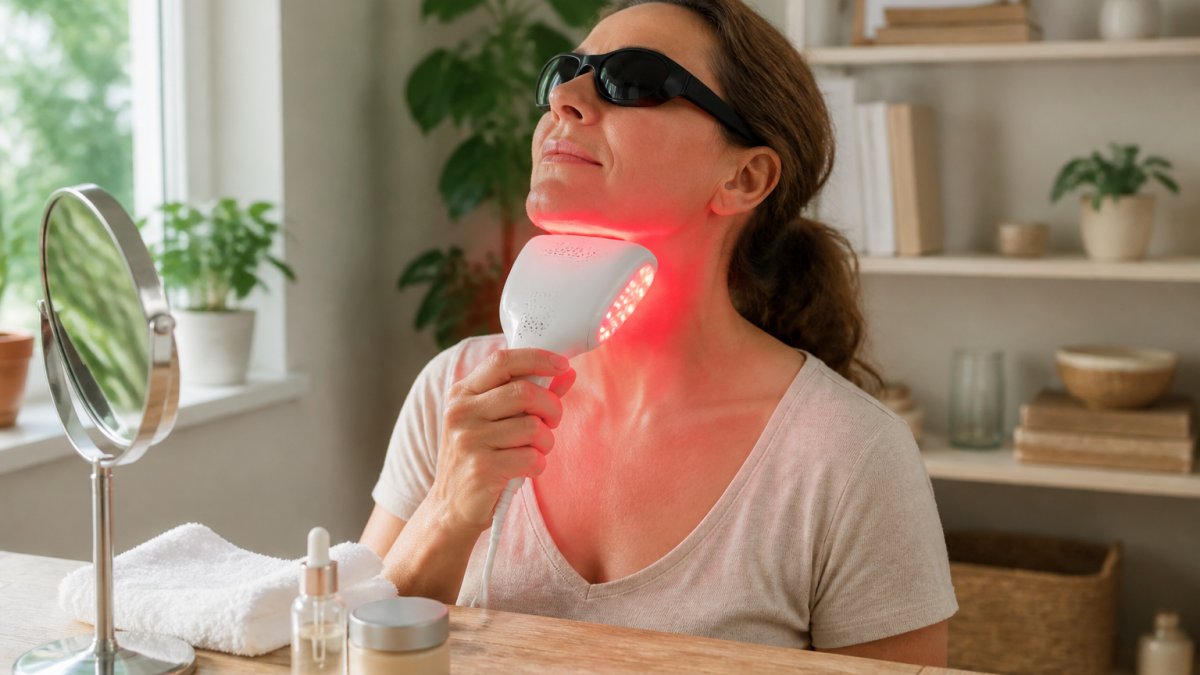
Start with these foundational safety practices:
- Wear protective eyewear designed for red light therapy wavelengths
- Keep the device at least 6 inches away from your eyes
- Start with 5-minute sessions and build up gradually
- Never look directly into the light source
- Use the device in a well-lit room, not in darkness
Positioning matters as much as duration. Angle the device toward your neck, jawline, and face rather than directly at your eyes, so your skin receives the therapy while intense light stays away from sensitive eye structures.
When to Avoid Red Light Therapy and Seek Professional Guidance
Some situations call for avoiding red light therapy entirely. Knowing when to step back protects your eye health.
Avoid red light therapy if you:
- Have been diagnosed with any eye disease or condition
- Recently had eye surgery or procedures
- Are taking medications that increase light sensitivity
- Experience pain, vision loss, or significant discomfort during use
- Have a family history of eye disease
Seek professional guidance from an eye care provider if:
- Your vision changes persist after stopping therapy
- You develop consistent eye discomfort with use
- You want to use red light therapy but have eye health concerns
- You're unsure whether the therapy is safe for your situation
- You experience new symptoms like flashing lights or floaters
Red light therapy side effects on eyes are usually temporary and mild. However, your individual eye health matters.
Red light therapy offers potential benefits for skin, circulation, and muscle health.
Better Living Mosaic helps you choose wellness products that deliver real value while prioritizing your safety.
Frequently Asked Questions
Can red light therapy damage your eyes?
Red light therapy is generally considered safe for eyes when used correctly, but improper use can cause temporary discomfort or strain. The key is avoiding direct, prolonged exposure to high-intensity red light without protection. Most side effects are mild and reversible. If you experience persistent pain, vision changes, or worsening of existing eye conditions, stop use and consult an eye care professional.
Should you wear eye protection during red light therapy?
Yes, wearing protective eyewear during red light therapy sessions is recommended, especially when using devices near the face or eyes. Protective glasses reduce the risk of eye strain and temporary vision changes. If your device is designed for facial use, check the manufacturer's guidelines, some recommend eye protection while others don't. When in doubt, err on the side of caution and use protection.
How long should you use red light therapy on your face?
Most manufacturers recommend 5 to 20 minutes per session for facial red light therapy, with sessions spaced at least 24 hours apart. Starting with shorter sessions (5-10 minutes) allows your eyes to adjust. Exceeding recommended session durations increases the risk of eye strain and temporary vision changes. Always follow your specific device's guidelines, as intensity and wavelength affect safe exposure time.
Can red light therapy worsen an existing eye condition?
Red light therapy may aggravate certain eye conditions, including macular degeneration, retinal disorders, or light-sensitive conditions. If you have glaucoma, diabetic retinopathy, or other diagnosed eye diseases, consult your eye care provider before using red light therapy. Even minor conditions like dry eye or chronic migraines can be affected by light exposure. Professional guidance ensures safe use for your specific situation.