

Table of Contents
- Top 5 Anti-Aging Serums for Women: Quick Comparison
- How to Choose an Anti-Aging Serum That Works for Your Skin
- Dermatologist-Recommended Skincare Ingredients in Anti-Aging Serums
- How to Layer Skincare Products with Anti-Aging Serums
- How to Build an Anti-Aging Skincare Routine Around Serums
- When to Start Using Anti-Aging Serums and What to Expect
- Frequently Asked Questions
Last Updated: September 3, 2026
Top 5 Anti-Aging Serums for Women: Quick Comparison
Finding the right anti-aging serum is challenging, beauty aisles overflow with options, each claiming transformation. The most expensive choice isn't always best for your skin. At Better Living Mosaic, we've curated anti-aging serums designed to address real signs of aging: fine lines, loss of elasticity, and dull texture. Below, we break down five standout options and help you choose the right fit.

| Product | Key Ingredient | Best For | Price |
|---|---|---|---|
| Beauty Bundle: Anti-Aging Skin & Hair Care | Herbal extracts, plant-powered formula | Natural skincare seekers | $85.00 |
| Glimmer Goddess™ Organic Retinol Wrinkle Repair | Organic retinol | Wrinkle and fine line reduction | $35.00 |
| DermaGlow™ Collagen Moisturizing Anti Aging Face Cream | Collagen, hydrating blend | Mature skin needing deep hydration | $110.24 |
| AH-8™ Face Firm Care Kit | Hexapeptide-8 firming technology | Eye and neck area targeting | $33.95 |
| LumiHydra™ Radiance Essence | Hydrating essence blend | Overall radiance and hydration | $29.95 |
How to Choose an Anti-Aging Serum That Works for Your Skin
Choosing an anti-aging serum starts with understanding what your skin needs. The real decision comes down to three factors: your primary skin concern, your skin type, and your tolerance for active ingredients.
First, identify your main concern. Fine lines and wrinkles? Look for retinol or peptides, which support cell turnover and collagen production. Loss of firmness? Seek hyaluronic acid and niacinamide to plump skin and improve barrier function. Dull complexion? Antioxidants and vitamin C brighten and rejuvenate.
Second, consider your skin type. Dry skin benefits from hydrating ingredients like sodium hyaluronate and glycerin. Oily or combination skin needs lightweight, fast-absorbing formulas. Sensitive skin requires fragrance-free, non-comedogenic options.
Third, think about active ingredient tolerance. If you're new to anti-aging products, start with gentler options like niacinamide or peptides. Introduce one new product every two weeks to let your skin adapt.
Dermatologist-Recommended Skincare Ingredients in Anti-Aging Serums
The most effective anti-aging serums contain research-backed ingredients recommended by dermatologists. Understanding what these ingredients do, and how they interact, helps you choose wisely.
Retinol remains a gold standard for anti-aging. It increases cell turnover and boosts collagen production, reducing fine lines and improving texture. Retinol requires gradual introduction; start with 0.25-0.3% concentration at night only, as it degrades in sunlight and increases photosensitivity.
Hyaluronic acid is a humectant that draws moisture into skin, plumping fine lines and improving hydration. Apply it to damp skin for maximum absorption.
Peptides like Hexapeptide-8 signal your skin to produce more collagen and elastin. They're gentler than retinol and work well for sensitive skin or those starting an anti-aging routine. Unlike retinol, peptides can be used morning and night.
Vitamin C is a powerful antioxidant that protects against sun damage, brightens dull skin, and supports collagen synthesis. It works best in the morning as part of your sun-protection strategy.
Niacinamide (vitamin B3) reduces inflammation, strengthens the skin barrier, and minimizes pores. It's versatile and works for all skin types, including sensitive skin.
Alpha Hydroxy Acids (AHAs) like glycolic acid exfoliate the surface, removing dead skin cells and improving texture. They increase sun sensitivity and should only be used at night with broad-spectrum SPF 30+ during the day.
Beta Hydroxy Acids (BHAs) like salicylic acid penetrate deeper into pores, making them better for oily or congested skin. Like AHAs, they require sun protection and gradual introduction.
Ingredient Interaction Guide: What NOT to Mix
Combining incompatible actives can trigger irritation, reduce efficacy, or damage the skin barrier.
Retinol + Vitamin C: Both are powerful but can increase irritation together. Solution: Apply vitamin C in the morning and retinol at night, or use them on alternate nights.
Retinol + AHAs/BHAs: This combination accelerates cell turnover too aggressively, causing redness and barrier damage. Solution: Use retinol on Monday, Wednesday, and Friday nights; use AHAs/BHAs on Tuesday and Thursday nights.
Vitamin C + AHAs/BHAs: Both are acidic. Solution: Use vitamin C in the morning and acids at night, or alternate nights.
Niacinamide + Acids: These are actually compatible and can be layered safely. Niacinamide even helps calm irritation from acids.
Retinol + Benzoyl Peroxide: Benzoyl peroxide deactivates retinol. Solution: Use benzoyl peroxide in the morning and retinol at night only.
Peptides + Most Actives: Peptides are gentle and compatible with retinol, vitamin C, niacinamide, and acids.
The 80/20 Rule for Anti-Aging Ingredients
You don't need every ingredient to see results. Retinol (or a retinoid) + sunscreen + hydration deliver 80% of anti-aging benefits. Everything else, peptides, vitamin C, niacinamide, acids, are optimizations for specific concerns. Start with a retinol serum, a hydrating serum with hyaluronic acid, and broad-spectrum SPF 30+. Once your skin adapts (4-8 weeks), add a second active if needed.
How to Layer Skincare Products with Anti-Aging Serums
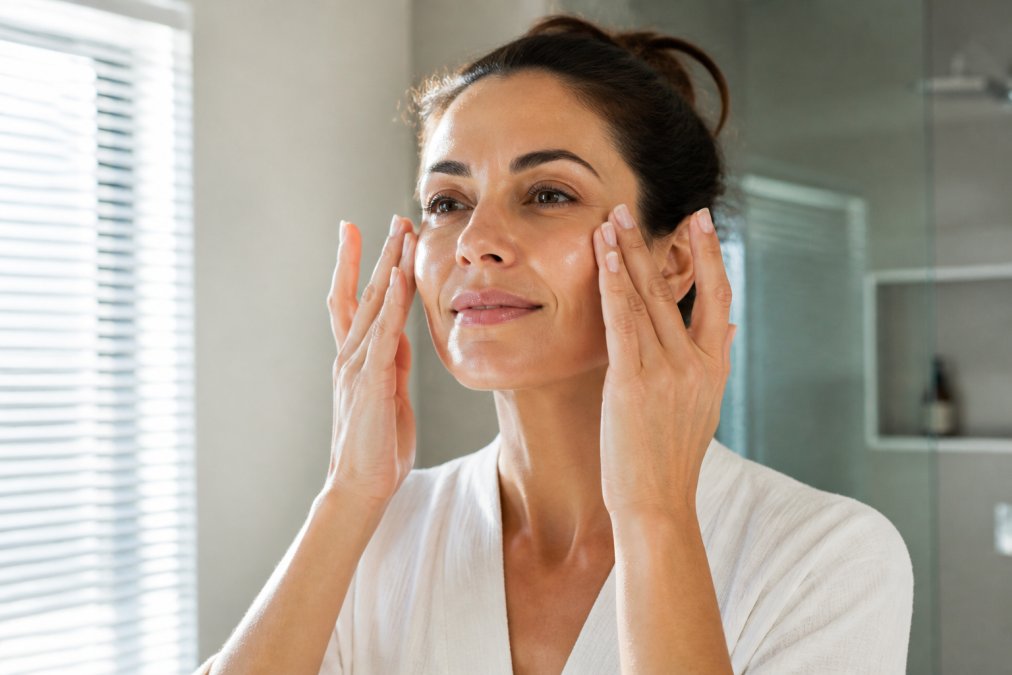
Layering serums correctly improves their effectiveness. Order matters because different textures and ingredients need specific sequencing to absorb properly.
Start with a clean face. Wash with a gentle cleanser, pat dry, and wait a minute for residual moisture to evaporate. Serums absorb better into dry skin.
Apply your serum next. Use 2-3 drops and gently press it into your skin with your fingertips, starting at the center and moving outward. Wait 30-60 seconds for the serum to set before moving to the next step.
Follow with a moisturizer to lock in the serum and prevent water loss. Even oily skin benefits from a lightweight moisturizer.
If using multiple serums, apply the thinnest, most water-based formula first, then layer heavier serums. For example, apply a hydrating essence before an oil-based serum.
At night, layer more aggressively. Apply a hydrating serum, wait a minute, then add a richer night cream or facial oil. Your skin repairs itself during sleep, making this ideal for multiple active ingredients.
How to Build an Anti-Aging Skincare Routine Around Serums
A serum works best as part of a coordinated system that cleanses, treats, and protects your skin.
Morning Routine: Cleanse with a gentle cleanser. Apply your anti-aging serum while skin is slightly damp to help absorption. Follow with a lightweight moisturizer and always finish with broad-spectrum SPF 30 or higher. Sun protection is non-negotiable for anti-aging; UV damage accelerates wrinkles more than any other factor.
Evening Routine: Cleanse to remove makeup, sunscreen, and debris. Apply your anti-aging serum, then layer a richer night cream or facial oil. Your skin's cell turnover increases at night, making this ideal for active ingredients like retinol.
Weekly Additions: A hydrating mask once or twice weekly boosts hydration and plumps fine lines temporarily. A gentle enzyme scrub or chemical exfoliant removes dead skin and improves serum absorption.

The Beauty Bundle from Better Living Mosaic offers a complete natural anti-aging system. The Phytotox Serum provides lightweight, fast-absorbing herbal support for fine line reduction. Layer it with the Phytotox Tallow night cream for deep hydration and overnight repair.
When to Start Using Anti-Aging Serums and What to Expect
The question of when to start anti-aging skincare isn't about a specific age, it's about prevention and addressing early signs before they deepen.
Age-Based Guidelines for Starting Anti-Aging Serums
Late 20s to Early 30s (Prevention Phase): Start preventative anti-aging skincare in your late 20s or early 30s. Your goal is prevention, not correction. A lightweight serum with antioxidants like vitamin C or niacinamide protects against UV damage and supports skin health.
Mid-30s to Early 40s (Early Correction Phase): By your mid-30s, introduce a serum with retinol or peptides if you're seeing fine lines or loss of elasticity. Cell turnover naturally slows, and active ingredients can make a difference. Start with low-concentration retinol (0.25-0.3%) and increase gradually.
40s and Beyond (Intensive Phase): Layer multiple anti-aging ingredients. Fine lines deepen into wrinkles, skin loses firmness, and age spots appear. A comprehensive routine combining retinol, hyaluronic acid, peptides, and antioxidants addresses multiple signs simultaneously. Skin becomes drier as oil production declines, making hydration non-negotiable.
Understanding the Skin Renewal Cycle and Why Patience Matters
Your skin completely renews itself approximately every 28-40 days, depending on age and skin health. When you apply a serum, it influences cells currently forming beneath the surface. Those cells take weeks to migrate upward and become visible. This is why dermatologists recommend 4-6 weeks minimum before evaluating results.
Retinol and exfoliating acids can accelerate this cycle, showing results faster but requiring gradual introduction.
Realistic Timeline for Visible Results
Weeks 1-2 (Hydration Phase): Most people notice improved hydration and a subtle glow. This is better moisture retention, not collagen production. Plumped, hydrated skin reflects light differently and appears smoother and more radiant.
Weeks 3-6 (Texture Improvement Phase): Skin texture visibly improves. If using retinol or exfoliating acids, you'll notice smoother skin and more even tone. Fine lines may appear less pronounced because skin is thicker and more hydrated.
Weeks 8-12 (Structural Change Phase): Consistent retinol use can support increased collagen and elastin production. Fine lines may soften noticeably. Skin elasticity may improve. Hyperpigmentation and age spots may begin fading.
Months 4-6 (Collagen Remodeling Phase): Wrinkles may appear less pronounced as skin structure improves. Skin may look more lifted and genuinely younger. The skin barrier may become significantly stronger.
6+ Months (Long-Term Maintenance Phase): Consistent use compounds results. Skin may continue improving in firmness, elasticity, and overall appearance. Benefits may plateau after 6-12 months, at which point maintenance becomes the goal.
What NOT to Expect
Complete wrinkle elimination: Serums soften wrinkles; they don't erase them entirely. Deep wrinkles may require professional treatments to eliminate completely.
Overnight results: Any serum claiming visible results in 24-48 hours is overstating temporary plumping effects.
Results without sun protection: UV damage accelerates aging faster than any serum can reverse it. Daily broad-spectrum SPF 30+ is non-negotiable.
Results without consistency: Anti-aging serums work through consistent, long-term use. Plan on daily use for at least 8-12 weeks before deciding if a product works.
Frequently Asked Questions
Q: What ingredients should I look for in an anti-aging serum?
A: Effective anti-aging serums contain retinol, hyaluronic acid, vitamin C, niacinamide, and peptides. Retinol boosts cell turnover and collagen production. Hyaluronic acid draws moisture into the skin for plumper texture. Vitamin C brightens and provides antioxidant protection. Niacinamide strengthens the skin barrier and reduces fine lines. Peptides support skin elasticity and firmness. Look for serums with multiple active ingredients rather than just one.
Q: At what age should women start using anti-aging serums?
A: Women can begin using anti-aging serums in their mid-20s as a preventative measure, particularly if they have sun exposure or early signs of fine lines. Most dermatologists recommend starting between ages 25-30 with gentle formulations containing antioxidants and hydration. If you're over 40, serums with retinol, peptides, and hyaluronic acid become especially valuable for addressing existing wrinkles and loss of elasticity. The key is consistency rather than waiting for visible aging.
Q: How often should I apply anti-aging serum for best results?
A: Most anti-aging serums work best when applied twice daily: once in the morning after cleansing and once at night before moisturizer. Apply a few drops to clean, slightly damp skin and gently press into the face and neck. If you're new to serums or have sensitive skin, start with once-daily application at night and gradually increase frequency. Allow 2-4 weeks of consistent use before evaluating results, as improvements in fine lines and skin texture take time.
Q: Can anti-aging serums be used on sensitive skin?
A: Yes, but choose formulations carefully. Look for serums labeled fragrance-free and non-comedogenic with gentle ingredients like hyaluronic acid, niacinamide, and ceramides. Avoid serums with high concentrations of retinol or strong exfoliating acids if your skin is reactive. Always perform a patch test on a small area first, and introduce new serums slowly. Plant-based serums with herbal extracts can be gentler options for sensitive skin, though patch testing remains essential regardless of ingredient source.