

Table of Contents
- Does Scalp Massage Really Support Hair Growth?
- How to Massage Your Scalp for Hair Growth
- How Often to Massage Your Scalp for Hair Growth
- Scalp Massage With Oil for Enhanced Results
- Scalp Massage for Thinning Hair: What to Expect
- Combining Scalp Massage With Evidence-Based Hair Care
- When to Seek Professional Guidance
- Frequently Asked Questions
Last Updated: October 9, 2026
Does Scalp Massage Really Support Hair Growth?
Scalp massage for hair growth works through improved circulation and follicle stimulation, though the evidence shows real but modest effects.

It's accessible, low-cost, and easy to do daily, but knowing what research shows about scalp massage hair growth helps you set realistic expectations.
What the research tells us
The science behind scalp massage and hair growth centers on blood flow: massage increases circulation to hair follicles, delivering more oxygen and nutrients to the roots.
Findings are limited, studies typically involve small groups over short periods. Some research suggests regular massage may help maintain hair thickness and reduce shedding, but dramatic regrowth is not guaranteed.
How blood circulation connects to hair follicles
Hair follicles are fed by tiny blood vessels in the scalp's deeper layers. When circulation improves, follicles receive better nourishment, which can strengthen existing hair and support new growth. Gentle pressure stimulates these vessels, and consistent stimulation may help maintain healthy blood flow, important because hair loss often involves reduced circulation. Massage reaches the subcutaneous layer where these vessels sit, which is why technique matters: light, circular motions beat aggressive tugging, which can damage hair and reduce circulation.
How to Massage Your Scalp for Hair Growth
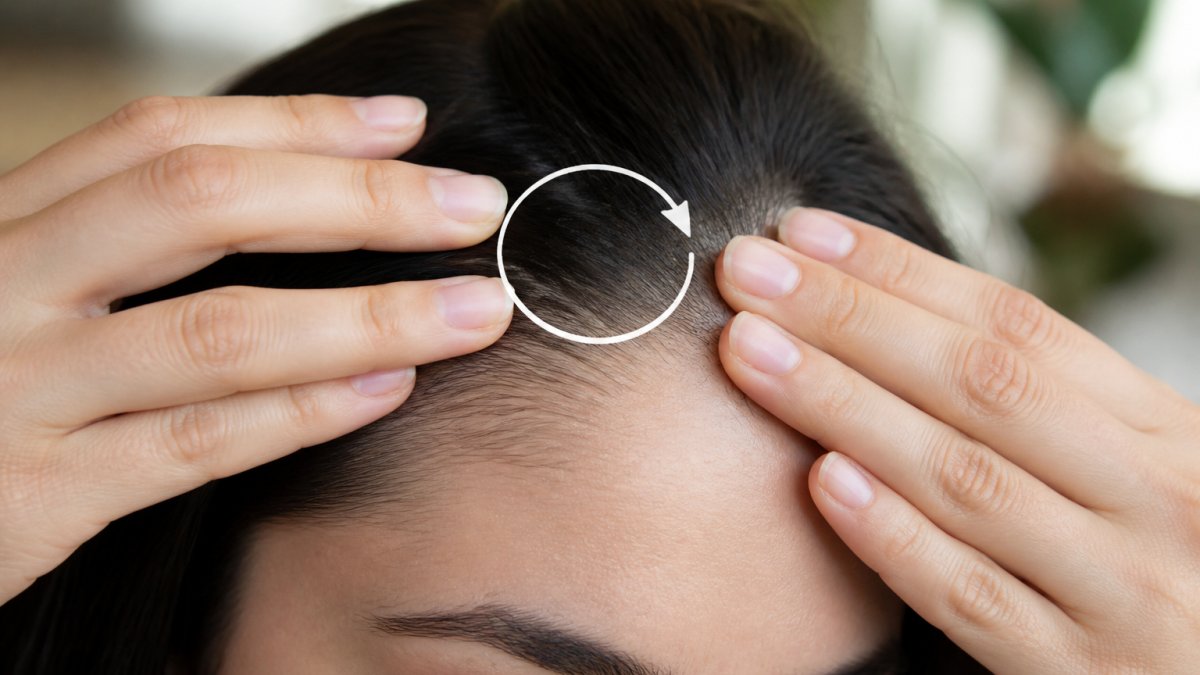
Most how-to guides say "massage gently in circles" and stop there, leaving the real questions unanswered: how hard, and for how long? Here's a repeatable protocol built around what scalp-massage studies have generally tested.
The protocol at a glance
Variable |
Tested-style range |
Everyday starting point |
|---|---|---|
Pressure |
Light to moderate, enough to move the scalp over the skull, never enough to hurt |
"Firm but comfortable" |
Movement |
Small circles, roughly coin-sized, or slow kneading |
Circles about the width of a quarter |
Duration |
About 4-5 minutes per session in the shorter studies; longer sessions in some trials |
5 minutes |
Frequency |
Daily in some studies; several times per week in others |
Once daily if it fits your routine |
Total commitment |
Weeks to months before any measurable change |
Reassess at 12 weeks |
A common pattern in research on scalp massage hair growth is a short daily session, often four to five minutes, sustained for several weeks.
Step-by-step technique with your fingertips
Step 1: Prepare your space and hands. Sit or stand comfortably, and make sure your hands are clean and your hair is dry or damp.
Step 2: Position your fingertips. Spread your fingers apart and place them against your scalp at your hairline, where you’ll begin the massage.
Step 3: Apply light to medium pressure. Press until the scalp moves slightly over the bone beneath it.
Step 4: Use small circular motions. Move your fingers in slow, coin-sized circles, keeping them planted and moving the scalp underneath.
Step 5: Cover the whole scalp. Move section by section from your hairline back toward your crown, then to your temples and the back of your head, until you’ve spent about 4-5 minutes total.
Step 6: Repeat most days. Daily is fine; three to five sessions per week is a reasonable floor.
Using a scalp massaging tool
For some people, a tool makes the habit easier to keep.
- Silicone scrubber or shampoo brush: Best in the shower with conditioner or a scalp serum for glide; good if fingertip pressure tires you.
- Manual wire or claw-style massager: Reaches the crown and back of the head with less hand fatigue. Use light pressure, wire tips concentrate force.
- Electric vibrating massager: Vibration may feel pleasant, but there is no strong evidence that stronger or faster is better.
Whichever tool you use: no dragging through tangled hair, no pressing to the point of pain, and clean it regularly.
Common mistakes to avoid
Pressing too hard. Aggressive massage irritates the scalp and breaks hair.
Using only your nails. Nails scratch the scalp and can introduce bacteria.
Skipping consistency. One massage changes nothing; the point is the accumulated habit over weeks and months.
Massaging over wet, tangled hair with a tool. This is the fastest way to snap strands.
Tool hygiene and technique-specific risks
A scalp massager that lives in the shower and never gets cleaned is a mild infection risk, especially with broken skin. Rinse after each use, wash weekly with mild soap, and let it dry fully.
Watch for these technique-specific problems:
- Excessive friction: burning or stinging means you are dragging, not kneading.
- Tangling and breakage: more shedding after a session means your technique is pulling hair.
- Scalp tenderness: next-day soreness means pressure was too high.
- Product buildup: oil or serum plus a dirty tool can clog the scalp and cause irritation.
How this fits with the rest of your routine
Massage is a supporting habit, not a standalone treatment. Use it as a short daily step alongside washing, conditioning, and any topical product, and if you're treating a diagnosed hair condition, it should sit alongside that plan, not replace it.
How Often to Massage Your Scalp for Hair Growth
Frequency determines whether massage becomes a habit or something you do randomly.
Most people do well with 3-5 massages per week, regular stimulation without overdoing it.
Consistency matters far more than intensity: a gentle 5-minute massage done regularly beats occasional aggressive sessions.
Pairing massage with an existing habit, your shower routine or bedtime, makes it easier to stick with.
Scalp Massage With Oil for Enhanced Results
Adding oil can amplify benefits: it nourishes the scalp, reduces dryness, and makes massage feel better.
Choosing the right oil and application method
Apply oil sparingly. Start with 3-5 drops; too much weighs down hair and requires extensive washing.
Warm the oil first. Warming it between your palms makes the massage feel better.
Massage for 5-10 minutes. Use the same circular technique; the oil helps fingers glide while nourishing the scalp.
WowMD™ Botanical Hair Growth Serum →
Leave it on for at least an hour, longer is fine, to give the scalp time to absorb nutrients.
At Better Living Mosaic, we recommend pairing scalp massage with products designed to support hair health. Our WowMD™ Botanical Hair Growth Serum contains rosemary, ginger, spirulina, and vitamins that nourish hair follicles.
Scalp Massage for Thinning Hair: What to Expect
If you're dealing with thinning hair, scalp massage is a supporting habit, not a fix. Thinning usually has an underlying driver, genetics, hormonal shifts, nutritional gaps, or a medical condition, and massage doesn't address those directly. What it can do is support scalp health and, in some people, contribute to a routine that slows shedding.
A realistic timeline
Hair grows slowly, about half an inch per month on average, so any visible change takes months, not weeks:
- Weeks 1-4: No visible change, the habit-building phase.
- Weeks 4-8: Some people report less shedding during washing or brushing, though this is subjective.
- Weeks 8-12: The earliest point at which a change in shedding or hair feel is plausible.
- Beyond 12 weeks: Any effect on thickness or density, if it happens at all, would show up here, gradually.
Signs of progress worth tracking
"My hair feels thicker" is unreliable, it changes with humidity, washing, and styling. Track something countable instead:
- Shed count: Collect hair from your brush or shower drain for a few days before you start, then repeat at weeks 4, 8, and 12, comparing like with like.
- Part width: Photograph your part in the same lighting and position every four weeks.
- Hairline photos: Same angle, light, and distance each time.
- Scalp feel: Less tightness or tenderness is a legitimate early sign your technique is working.
A short log, date, shed count, one photo, takes a minute and beats memory.
Who should avoid or modify scalp massage
Massage isn't appropriate for everyone. Skip it, or check with a clinician first, if any of the following apply:
- Active scalp irritation, rash, or inflammation. Massage can spread irritation and make it worse.
- Cuts, scrapes, or open sores. Pressure over broken skin risks infection.
- Recent scalp procedures. Follow the aftercare rules for transplants, biopsies, and dermatologic treatments.
- Diagnosed scalp conditions such as psoriasis or eczema. Whether massage is fine depends on your flare state and treatment plan, ask your dermatologist.
- Significant tenderness or pain. Scalp pain is a symptom, not something to massage through.
How massage fits with evidence-based hair care
Massage is not a substitute for diagnosis or established treatment. If you have a diagnosed condition like androgenetic alopecia, massage can sit alongside your clinician's plan as a low-risk supporting habit, just don't let it delay evaluation.
A practical combined approach looks like this:
- Get a diagnosis if hair loss is sudden, patchy, or accompanied by other symptoms.
- Follow your clinician's plan for any prescribed or recommended treatment.
- Add massage as a supporting habit, a few minutes most days, gentle pressure, no tugging.
- Support the basics: protein, iron, zinc, and B vitamins; manageable stress; gentle styling.
- Track for 12 weeks before drawing conclusions.
If you want to layer in a topical product, a lightweight scalp serum applied during your massage is an easy way to combine steps. Our WowMD™ Botanical Hair Growth Serum is formulated with rosemary, ginger, spirulina, and vitamins, and absorbs quickly enough to use daily without residue.
When to see a professional
Book a dermatologist appointment if you experience sudden or patchy hair loss, scalp pain, scaling, or signs of infection; if hair loss runs strongly in your family and you want personalized options; or if you take medications that can affect hair. A clinician can identify the cause and recommend treatments massage alone cannot replace.
Combining Scalp Massage With Evidence-Based Hair Care
Massage is most effective as part of a comprehensive approach.
Ensure adequate nutrition. Hair follicles need protein, iron, zinc, and B vitamins; supplements can fill gaps in your diet.
Be consistent. Commit for at least 12 weeks before expecting noticeable changes, hair growth cycles span months.
Avoid harsh treatments. Tight hairstyles, excessive heat, and chemical treatments damage hair and counteract massage's benefits.
When to Seek Professional Guidance
While scalp massage is safe for most people, certain situations warrant professional advice.
Consult a dermatologist if:
- You experience sudden hair loss beyond normal shedding
- Your scalp shows signs of infection, inflammation, or unusual irritation
- You have a diagnosed scalp condition like psoriasis or eczema
- Hair loss runs strongly in your family and you want personalized options
A dermatologist can identify the root cause and recommend treatments beyond massage, sometimes hair loss requires medical intervention.
Talk to a doctor if:
- You're taking medications that might affect hair growth
- You have nutritional deficiencies that could contribute to hair loss
- You want to explore supplements or medical treatments alongside massage
Professional guidance helps you build a realistic plan tailored to your situation.
Scalp massage for hair growth works best when you understand what it can and can't do.
At Better Living Mosaic, we've curated products that work alongside your massage routine. Our Beauty Bundle: Anti-Aging Skin & Hair Care includes Mane Magic, a nourishing scalp oil designed to support healthy hair growth when used with massage.

Frequently Asked Questions
Can scalp massage really help hair grow?
Scalp massage may support hair health by improving blood circulation and oxygen delivery to hair follicles. While research is still limited, some studies suggest consistent massage can contribute to hair thickness and reduced shedding. Results vary by individual, and scalp massage works best as part of a complete hair-care routine that includes proper nutrition and targeted treatments. It's not a standalone cure for hair loss but a supportive practice for scalp health.
How long should you massage your scalp for hair growth?
Most experts recommend 5 to 10 minutes of scalp massage daily for best results. You can start with shorter sessions of 2 to 3 minutes and gradually increase as your scalp becomes accustomed to the pressure. Consistency matters more than duration—a brief daily massage is more effective than occasional longer sessions. Listen to your scalp; if you experience discomfort, reduce the time or pressure.
Does scalp massage work for thinning hair?
Scalp massage may help with thinning hair by stimulating blood flow to hair follicles and reducing tension in the scalp. However, thinning hair often has multiple causes—genetics, hormones, stress, or nutritional deficiencies—and massage alone cannot address all of them. For thinning hair, combine scalp massage with targeted hair-growth products and consult a dermatologist to rule out underlying conditions that require medical treatment.
Can you use oil during scalp massage?
Yes, using oil during scalp massage can enhance the experience and provide additional nourishment. Oils like those in botanical hair-growth serums can improve scalp hydration and reduce friction during massage. Apply a small amount of oil to your scalp, then massage gently using circular motions. Allow the oil to penetrate for at least an hour or overnight for deeper conditioning. Always use lightweight, non-greasy formulas to avoid buildup.