

Table of Contents
- Mineral vs Chemical Sunscreen for Acne-Prone Skin: Quick Comparison
- How Each Type Works on Acne-Prone Skin
- Non-Comedogenic Sunscreen Ingredients to Look For
- Pros and Cons of Mineral Sunscreen for Acne
- Pros and Cons of Chemical Sunscreen for Acne
- Sunscreen Application Tips for Acne-Prone Skin
- Sweat, Sebum, and Acne Medications: What Changes Your Choice
- Environmental and Reef-Safe Considerations for Acne Sufferers
- Frequently Asked Questions
Last Updated: September 22, 2026
Mineral vs Chemical Sunscreen for Acne-Prone Skin: Quick Comparison
Mineral vs chemical sunscreen for acne prone skin comes down to one question: which filter type keeps pores clear while still blocking UV rays? Mineral sunscreens use zinc oxide or titanium dioxide to sit on top of skin and reflect UV light; chemical sunscreens absorb UV rays and convert them to heat. Mineral formulas generally win on tolerability, though newer chemical filters and "invisible" mineral options have narrowed the gap.
Factor |
Mineral Sunscreen |
Chemical Sunscreen |
|---|---|---|
Active ingredients |
Zinc oxide, titanium dioxide |
Avobenzone, oxybenzone, octisalate |
How it works |
Reflects and scatters UV rays |
Absorbs UV rays, converts to heat |
Onset time |
Immediate |
15-20 minutes |
White cast risk |
Higher (unless tinted) |
Minimal |
Pore-clogging risk |
Lower |
Varies by formulation |
Best for |
Sensitive, reactive, acne-prone skin |
Everyday wear, deeper skin tones |
How Each Type Works on Acne-Prone Skin
The mechanism matters because it determines how a sunscreen behaves on skin that's already inflamed or congested.
How Mineral (Physical) Sunscreen Works
Mineral sunscreen works by sitting on top of the skin as a physical blocker. Zinc oxide and titanium dioxide particles reflect and scatter UVA and UVB rays before they penetrate, so they're less likely to migrate into pores or react with sebum. Zinc oxide also carries mild soothing properties, which is why many dermatologist-recommended formulas for reactive skin lean on it.
How Chemical Sunscreen Works
Chemical sunscreen works by absorbing UV rays into the skin and converting them into heat. Active ingredients like avobenzone, oxybenzone, and octisalate penetrate the skin barrier to do this, which is why chemical formulas feel lighter and spread more easily, and why they need 15-20 minutes to become effective. For acne-prone skin, the concern isn't the mechanism but the surrounding formulation: chemical sunscreens often pair filters with emollients, fragrances, and preservatives that can trigger irritation or clog pores.
Non-Comedogenic Sunscreen Ingredients to Look For
Non-comedogenic sunscreen ingredients are the ones least likely to clog pores or trigger comedones. The term means a product is formulated to reduce the risk of pore blockage, though it isn't a regulated guarantee. On a label, focus on these:
- Zinc oxide - broad-spectrum mineral filter with soothing properties
- Titanium dioxide - mineral filter, gentle on sensitive skin
- Niacinamide - supports the skin barrier and helps regulate sebum production
- Hyaluronic acid - lightweight hydration without heaviness
- Dimethicone - a silicone that creates a breathable barrier; generally well tolerated
- Glycerin - humectant that draws water into skin
Pros and Cons of Mineral Sunscreen for Acne
Mineral sunscreen is generally the safer default for acne-prone skin because the filters stay on the surface and rarely provoke breakouts. Zinc oxide and titanium dioxide are among the least irritating UV filters available, and they work immediately on application. That said, formulation details matter more than filter type alone.
Pros:
- Lower risk of pore-clogging and irritation
- Works immediately, no wait time
- Suitable for sensitive skin and post-treatment skin
- Zinc oxide offers mild calming benefits
- Photostable, so it doesn't break down quickly in sunlight
- Broad-spectrum coverage from a single filter (zinc oxide covers both UVA and UVB)
Cons:
- White cast, particularly on medium to deep skin tones
- Thicker texture that can feel heavy under makeup
- Can be harder to spread evenly
- Some formulas pill or separate under other products
- Traditional formulas can feel occlusive on oily skin
The White Cast Problem, and What Actually Solves It
The white cast is the main reason people abandon mineral sunscreen. Zinc oxide and titanium dioxide are literally white pigments: the larger the particle, the more visible the cast, but larger particles also sit most reliably on top of skin without being absorbed.
Modern formulations work around this in three ways:
- Micronized particles shrink the pigment size so the cast is far less visible. Very small particles behave differently on skin and in the environment, which is why some brands specify "non-nano", a labeling choice, not a regulatory category.
- Tinted formulas use iron oxides to match skin tone. Iron oxides also help block visible light, which some practitioners find useful for post-inflammatory hyperpigmentation left behind by acne.
- Sheer or gel-cream bases swap heavy emollients for lighter silicones and water-based carriers, reducing the occlusive feel that can aggravate oily skin.
What to Check on the Label
- Active percentage. Zinc oxide formulas typically range from around 10% to 25%. Higher percentages mean more coverage but also more cast and texture.
- Non-comedogenic claim. A useful starting filter, but not a regulated guarantee, read the full ingredient list.
- Oil-free and fragrance-free. Both reduce the odds of a reaction on reactive skin.
- Water resistance. If you sweat or swim, look for the 40- or 80-minute label.
Who Mineral Sunscreen Suits Best
Mineral formulas are the better starting point if you're on acne actives, have sensitive or post-procedure skin, or have reacted to chemical filters before, and they're practical if you want immediate protection without a wait time. If texture or cast is your main objection, test a tinted or micronized mineral formula before ruling the category out.
Pros and Cons of Chemical Sunscreen for Acne
Chemical sunscreen wins on feel and finish, but it asks more of acne-prone skin. The filters themselves aren't inherently pore-clogging, yet the lotions and gels they're suspended in often are. If your skin tolerates a given formula, it's comfortable enough to wear daily, which matters more than any theoretical advantage.
Pros:
- Lightweight, spreads easily, no white cast
- Works well under makeup
- Better for deeper skin tones in untinted formulas
- Often water- and sweat-resistant for longer
- Easier to reapply without a heavy buildup
Cons:
- Requires 15-20 minutes before sun exposure
- Higher irritation risk from avobenzone and oxybenzone
- Surrounding ingredients may clog pores
- Some filters break down faster in direct sun
- Absorption into the skin raises concerns for sensitive users
Sunscreen Application Tips for Acne-Prone Skin
Sunscreen application tips for acne-prone skin start with quantity and timing. Most people apply far less than the amount used in SPF testing, so real protection is lower than the label suggests. Apply a generous layer, roughly a nickel-sized amount for face and neck, about 15 minutes before going outside if you're using a chemical formula.
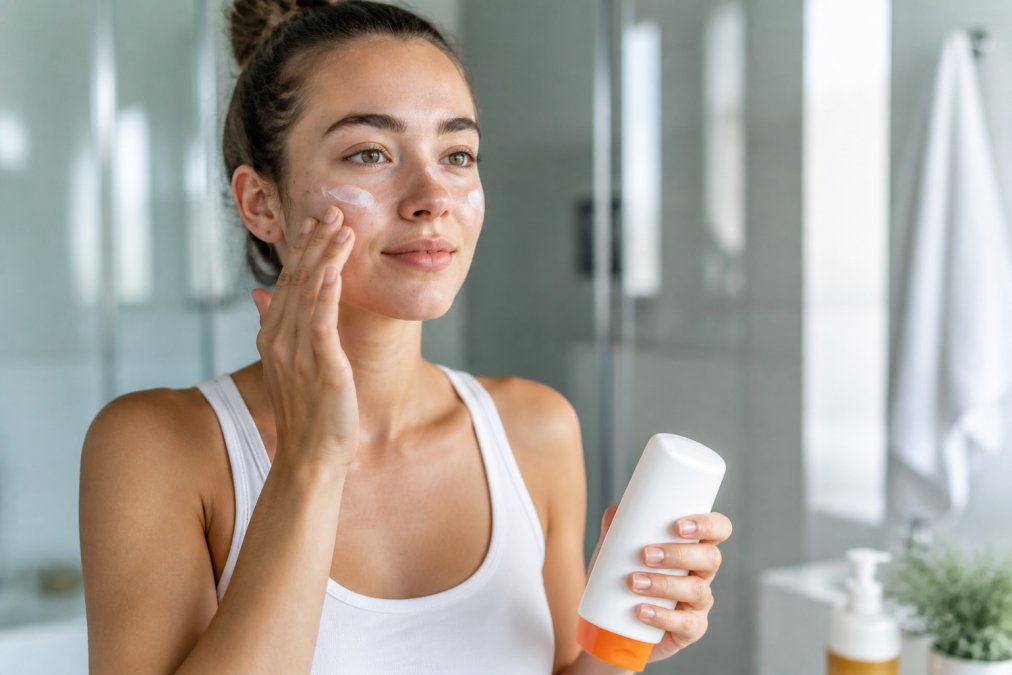
A few habits that make a real difference:
- Apply to clean, moisturized skin, not over heavy serums
- Let each layer dry before adding makeup
- Reapply every two hours outdoors, or after sweating
- Don't skip the hairline, jaw, and ears, common breakout zones
- Double cleanse at night to remove sunscreen fully
Sweat, Sebum, and Acne Medications: What Changes Your Choice
This is where most sunscreen guides stop short, and it matters most if you're actively treating breakouts. Sweat, sebum, and prescription or over-the-counter actives each change how a sunscreen behaves on your skin, in different ways.
How Acne Medications Interact With Sunscreen Filters
The core issue is barrier condition. Retinoids (tretinoin, adapalene, tazarotene), benzoyl peroxide, and salicylic acid all accelerate cell turnover and thin the outer layer of skin. That's how they clear pores, but it also makes skin more permeable and reactive than baseline. Two consequences follow:
- Chemical filters sting more readily on treated skin. Avobenzone and oxybenzone are the usual suspects. A common pattern is a user who tolerated a chemical formula for years, started a retinoid, and suddenly felt burning on application. The filter didn't change; the barrier did.
- Mineral filters sit on top of the compromised layer rather than crossing it. Zinc oxide and titanium dioxide don't need to penetrate to work, so there's less opportunity for a reaction at the barrier level.
Timing Your Routine Around Actives
Order of operations matters more than most people realize:
- Night actives, morning sunscreen. Retinoids and benzoyl peroxide are typically evening products. Applying sunscreen the next morning is fine, but keep the morning routine minimal, cleanser, moisturizer, sunscreen, so you can isolate any reaction.
- Don't layer sunscreen directly over freshly applied benzoyl peroxide. Let the active dry fully, or apply it at night only; mixing the two can increase irritation and pilling.
- Patch-test on the jawline for two to three days before full-face use, especially when starting a new active and a new sunscreen the same week. Change one variable at a time.
Sweat and Sebum: Which Filter Type Holds Up
Oily, acne-prone skin produces more sebum, and sebum is a solvent, it breaks down a sunscreen film over the day. Sweat does the same thing faster.
- Mineral formulas stay put as a physical film but can streak or wear unevenly under heavy sweat. Look for water-resistant labeling (40 or 80 minutes) if you exercise outdoors.
- Chemical formulas often hold up better through sweat because they bond with skin, but a damp, sebum-heavy barrier can drive more filter absorption, the irritation pathway for reactive skin.
- Either way, reapplication is the real variable. Every two hours outdoors, or immediately after heavy sweating, regardless of filter type. A powder or stick SPF over makeup tops up without disturbing the base layer.
A Note on 'Water-Resistant' Labels
The FDA regulates water-resistance claims, and a product can only claim 40 or 80 minutes based on standardized testing. There is no "waterproof" sunscreen, that claim isn't permitted. If you swim or sweat heavily, treat the 80-minute label as a reapplication timer, not a guarantee.
Environmental and Reef-Safe Considerations for Acne Sufferers
Reef-safe sunscreen is a growing priority, and it overlaps neatly with acne-friendly choices. Several coastal destinations have restricted sunscreens containing oxybenzone and octinoxate over coral damage concerns. Mineral filters, particularly non-nano zinc oxide and titanium dioxide, are the standard alternative.
Frequently Asked Questions
Do dermatologists prefer mineral or chemical sunscreen for acne-prone skin?
Many dermatologists recommend mineral sunscreens with zinc oxide or titanium dioxide for acne-prone skin because they sit on top of the skin and are less likely to cause irritation or clog pores. However, some chemical filters are also non-comedogenic and well-tolerated. The best choice depends on your skin's sensitivity, your acne medications, and whether you prefer a lightweight feel or a physical blocker.
Are mineral sunscreens pore-clogging?
Mineral sunscreens are generally not pore-clogging when formulated with non-comedogenic ingredients. Zinc oxide and titanium dioxide are physical blockers that stay on the surface and are unlikely to block pores. However, some mineral formulas contain heavy oils or thick emollients that can contribute to comedones. Check labels for non-comedogenic and oil-free claims, and patch-test new products.
What ingredients should acne-prone skin avoid in sunscreen?
Acne-prone skin should avoid sunscreens with pore-clogging ingredients like coconut oil, isopropyl myristate, and certain silicones. Some chemical filters such as oxybenzone and avobenzone may cause irritation in sensitive skin. Look for non-comedogenic, oil-free, and fragrance-free formulas. Mineral sunscreens with zinc oxide or titanium dioxide are often safer, but always check the full ingredient list.
How can I tell if my sunscreen is clogging my pores?
Signs your sunscreen may be clogging pores include new blackheads, whiteheads, or small bumps appearing after you start using it. If breakouts cluster where you apply sunscreen most, it could be the culprit. Stop using it for a week and see if your skin clears. Choose non-comedogenic, oil-free sunscreens and apply them after your acne treatment has fully absorbed.